Nutri Courses

Magazine Nutrients and Metabolism

Autophagy

📅 25. 8. 2026

Autophagy

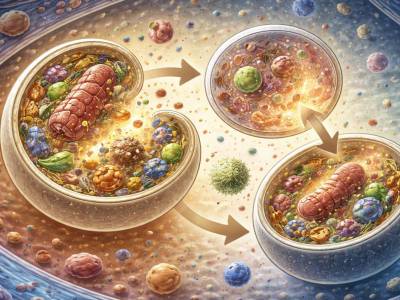
Autophagy is one of the fundamental mechanisms through which the cell continuously maintains its internal environment in order. The name comes from the Greek words autos (self) and phagein (to eat) and can be loosely translated as "self-digestion." In this...


Carbohydrates

📅 3. 9. 2024

Carbohydrates

Carbohydrates provide the body with quickly usable energy (1 gram of carbohydrates contains 17.63 kJ = approx. 4 kcal). Depending on their composition, the speed at which energy is released from them in the body varies (fastest from so-called sugars)....

Fiber

📅 3. 9. 2024

Fiber

Fiber is factually a part of the carbohydrate group. There are two basic types of fiber (found in plants): Soluble: It is composed of components of plant cells that swell in water (= it is hygroscopic). In the large intestine,...

Fats

📅 3. 9. 2024

Fats

Fats, along with proteins and carbohydrates, are the fundamental building blocks of our body. They perform a number of essential functions: they are solvents for vitamins A, D, E, K, they are essential for the formation of sex and adrenal...

Vitamins

📅 3. 9. 2024

Vitamins

Vitamins are substances that we must obtain through food because the human body is unable to produce them by itself (higher animals lost the ability to synthesize these substances during their development when mutations in the course of evolution made...

Minerals

📅 3. 9. 2024

Minerals

Minerals are present in the body in only small quantities — they make up approximately 4 percent of body weight. These inorganic substances are essential for a variety of life processes, being, for example, an integral part of the structure...

Phytonutrients

📅 3. 9. 2024

Phytonutrients

Phytonutrients, often referred to as phytochemicals, are compounds found in various plants. In terms of categorization, they are a specific group because they do not include vitamins, minerals, fatty acids, starch, or fiber. This group includes a vast number of...

Glycemic Value of Foods

📅 3. 9. 2024

Glycemic Value of Foods

The foods we eat have, among other things, the ability to trigger what is known as the glycemic response in the body. This means that after food consumption, the pancreas reacts by producing a certain amount of the hormone insulin,...

Acid-Base Balance

📅 3. 9. 2024

Acid-Base Balance

The functioning of bodily cells, tissues, organs, or entire systems is always influenced by the quality of the acid-base balance of the internal environment. Once such a balance is disrupted (in absolute values or at the level of tendencies that...

Recommended Daily Allowances of Nutrients

📅 3. 9. 2024

Recommended Daily Allowances of Nutrients

The Recommended Daily Allowance (RDA, in English GDA – Guideline Daily Amounts, RDI – Reference Daily Intake, formerly RDA – Recommended Dietary Allowance) refers to the amount of a certain nutrient (vitamin, mineral, or other substances) that we are legislatively recommended to obtain from food to meet...

Metabolic flexibility

📅 3. 9. 2024

Metabolic flexibility

Metabolic Flexibility Anyone who embarks on changing their dietary system and wishes the organism's behavior to move in the desired direction while maintaining good health must respect one absolutely essential characteristic of human metabolism – metabolic flexibility. Even though this...

Proteins

📅 3. 9. 2024

Proteins

Proteins are one of the macronutrients and in the body they primarily serve structural and functional roles. They are composed of amino acids, and adequate intake is essential for the repair and functioning of muscles, skin, connective tissues, and internal organs. What matters is not only the total amount of protein in the diet, but also its quality and the mix of sources.

Antioxidants

📅 3. 9. 2024

Antioxidants

Antioxidants are substances found in the diet (mostly in plants) whose role is to eliminate (neutralize, quench) so-called free radicals (unstable and reactive compounds with unpaired electrons, which seek another electron to form a stable molecule—the most common representatives being...

Omega-3 fatty acids

📅 3. 9. 2024

Omega-3 fatty acids

Omega-3 fatty acids are essential polyunsaturated fats that the human body cannot produce in sufficient quantities on its own and relies on dietary intake. From a physiological perspective, eicosapentaenoic acid (EPA) and docosahexaenoic acid (DHA) have crucial significance. These substances...

Protein distribution throughout the day

📅 15. 5. 2022

Protein distribution throughout the day

Proteins are a component whose quantity is usually monitored first when assessing the quality of a diet. In practice, it turns out that despite the crucial role they play in metabolism, most of the population manages them poorly in their...