
Author: Mgr. Martin Jelínek
Expertise: nutrition, education in nutrition
Last expert review: September 3, 2024
Proteins are one of the macronutrients and in the body they primarily serve structural and functional roles. They are composed of amino acids, and adequate intake is essential for the repair and functioning of muscles, skin, connective tissues, and internal organs. What matters is not only the total amount of protein in the diet, but also its quality and the mix of sources.
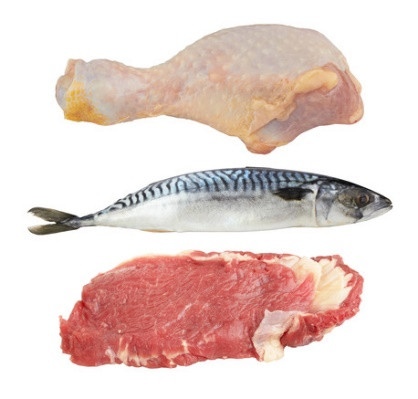
Proteins are the most complex group of nutrients overall. This complexity is due not only to their structure but also to the functions they perform in the organism. They are composed of units called amino acids. The quantity of these amino acids and their ratios in each food determine the quality of proteins.
Of the amino acids commonly incorporated into human proteins, nine are considered essential – the body cannot produce them in sufficient quantities and must obtain them from the diet. [1]
The quality of proteins is related to the presence of individual amino acids and how well the organism can utilize them. Therefore, in professional assessments of protein quality, the digestibility of essential amino acids is considered alongside their presence. For this purpose, the FAO recommends the DIAAS system, which considers the digestibility of individual essential amino acids in the small intestine. [2]
Since proteins are a fundamental building block of muscles, skin, connective tissues, and internal organs, we cannot function in the long run without their adequate intake. Therefore, it is necessary to ensure an appropriate amount in the diet and distribute them suitably throughout the day.
For healthy adults, the European Food Safety Authority (EFSA) sets the population reference intake at 0.83 g of protein per kilogram of body weight per day. However, this is not a universally optimal value for every person, as the requirement changes according to physiological conditions and other individual factors. [3]
With long-term protein deficiency, the breakdown of one's own protein structures may exceed their creation. This can manifest as, for example, a loss of muscle tissue, impaired tissue regeneration, or general fatigue.
Neither is the opposite extreme desirable. Proteins have a high thermic effect among basic nutrients, and their metabolism involves, among other things, nitrogen processing and urea formation. Thus, in practice, it makes sense to monitor the overall amount of protein, especially if one adds large doses of protein concentrates or has a very high intake of protein-rich foods in their diet.
However, for healthy individuals, it is incorrect to automatically claim that higher protein intake damages the kidneys. A current meta-analysis of randomized studies in adults without chronic kidney disease did not find consistent biochemical signs of damage, although a high-protein diet can increase glomerular filtration. The long-term consequences of very high intake remain less certain. [4]
Higher consumption of certain protein foods can also affect acid-base processes in the organism. It is more accurate in this context to speak about dietary acid load rather than a simple "shift in body pH". A diet rich in certain protein foods can increase the amount of acid the body must metabolically process and excrete, while blood pH is strictly regulated under physiological conditions. The importance of dietary acid load for long-term health is still being studied, and much of the available data is observational. [5]
Proteins are found in large amounts in meat, where their content tends to be around 20%, in eggs approximately 15%, in dairy products approximately 3–30% (on a scale from milk to cheese), in legumes 20–30%, seeds 10–20%, nuts around 20%, and grains 5-22%. On the contrary, their content in vegetables and fruits is usually significantly lower.
In practice, it is therefore not necessary to focus on just one food or a single source. The key is to design a diet that provides an appropriate total amount of protein and adequate representation of individual amino acids.
Different protein sources vary in amino acid composition and digestibility. Thus, when evaluating an entire diet, the overall composition is more important than assessing a single food in isolation. [1, 2]
In practice, it is essential to learn to incorporate foods into the diet that will ultimately provide a sufficient but not unnecessarily extreme amount of protein. Some people track their intake using calculations, while others orient themselves based on the composition and size of portions.
The correctly set amount of protein and its quality significantly influence metabolism, tissue regeneration, and overall organism functioning. Therefore, it makes sense to not only know their content in individual foods but also the differences between various sources.

Mgr. Martin Jelínek
Founder of NutriCourses, lecturer and author of the educational system in the field of nutrition. He has been systematically engaged in nutrition education since 1999. He is the author of the educational application ZOF and professional publications focused on nutrition and a healthy lifestyle.