
Author: Mgr. Martin Jelínek
Expertise: nutrition, education in nutrition
Last expert review: September 3, 2024

Fats, along with proteins and carbohydrates, are the fundamental building blocks of our body. They perform a number of essential functions:
In general, the richest sources of fats are nuts and seeds, as well as olives, soybeans, fatty meats, and some dairy products.
To adjust our diet in the desired way by manipulating the fat content, it is first necessary to understand their structure and classification. Fats are actually part of a broader group called lipids. Chemically, they are divided into:
Fats contained in food are called triacylglycerols or triglycerides and are composed of three fatty acids attached to glycerol. Based on this, a simple system is presented based on the fatty acid content, whereby fats are divided into:
In the chemical structure of saturated fats, the carbon atoms are saturated with hydrogen atoms:

They are found in the largest amount and proportion in foods of animal origin (less in plant sources). It is generally true for saturated fats that they solidify in cold conditions and are opaque. The higher the temperature at which they remain solid, the more saturated fatty acids they contain.
In the chemical structure of unsaturated fats, there is a double bond – some carbon atoms are not fully saturated with hydrogen atoms:
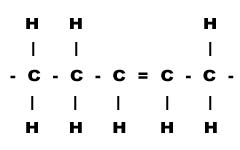
Unsaturated fatty acids are further divided into monounsaturated and polyunsaturated.

Based on the position of the first double bond, unsaturated acids can be divided into several groups labeled with the well-known term omega. For example, omega-3 means that the first double bond appears on the third carbon from the end of the chain, omega-6 on the sixth carbon, and omega-9 on the ninth.
Monounsaturated fats contain one double bond, representing omega-9 acids. Generally, monounsaturated fats have a lower capacity for oxidation than polyunsaturated fats and are more stable under normal conditions.
| Fatty acid | Number of carbons | Occurrence |
|---|---|---|
| Palmitoleic | 16 | Dairy fat, meat, fish, eggs, macadamia and sea buckthorn oil. |
| Oleic | 18 | Sunflower, olive, and canola oil, almonds, peanuts, avocado, fish, dairy fat. |
| Erucic | 22 | Canola oil, mustard seed. |
From a chemical viewpoint, they contain two or more double bonds. These include omega-3 and omega-6 fatty acids.

| Fatty acid | Number of carbons | Number of double bonds | Occurrence |
|---|---|---|---|
| Linoleic (omega-6) | 18 | 2 | Sunflower, canola, soybean, and sesame oil |
| Alpha-linolenic (omega-3) | 18 | 3 | Walnuts, canola and soybean oil, fortified margarines |
| Gamma-linolenic (omega-6) | 18 | 3 | Blackcurrant, evening primrose, borage |
| Arachidonic (omega-6) | 20 | 4 | Animal fats |
| Eicosapentaenoic (omega-3) | 20 | 5 | Fatty fish (salmon, mackerel, herring, sardines) |
| Docosahexaenoic (omega-3) | 22 | 6 | Fatty fish |
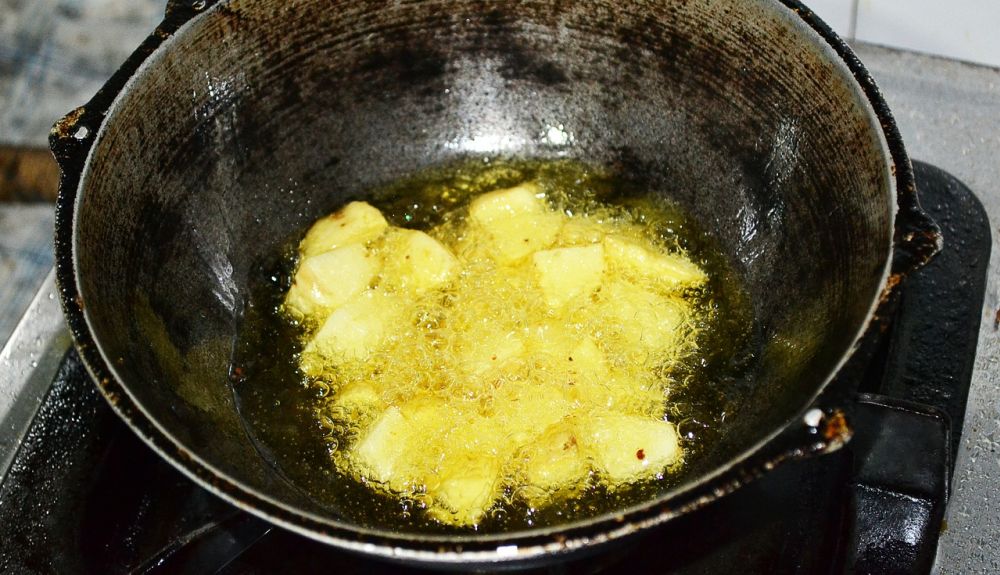
This group of fats is being increasingly discussed in terms of health (increased risk of cardiovascular disease, increase in LDL cholesterol levels, etc.). Trans fats enter the diet in three ways:
If we want to influence metabolic processes and the resulting level of health through diet by choosing fat-rich foods, the following rules should be respected:

Mgr. Martin Jelínek
Founder of NutriCourses, lecturer and author of the educational system in the field of nutrition. He has been systematically engaged in nutrition education since 1999. He is the author of the educational application ZOF and professional publications focused on nutrition and a healthy lifestyle.