
Author: Mgr. Martin Jelínek
Expertise: nutrition, education in nutrition
Last expert review: April 7, 2022
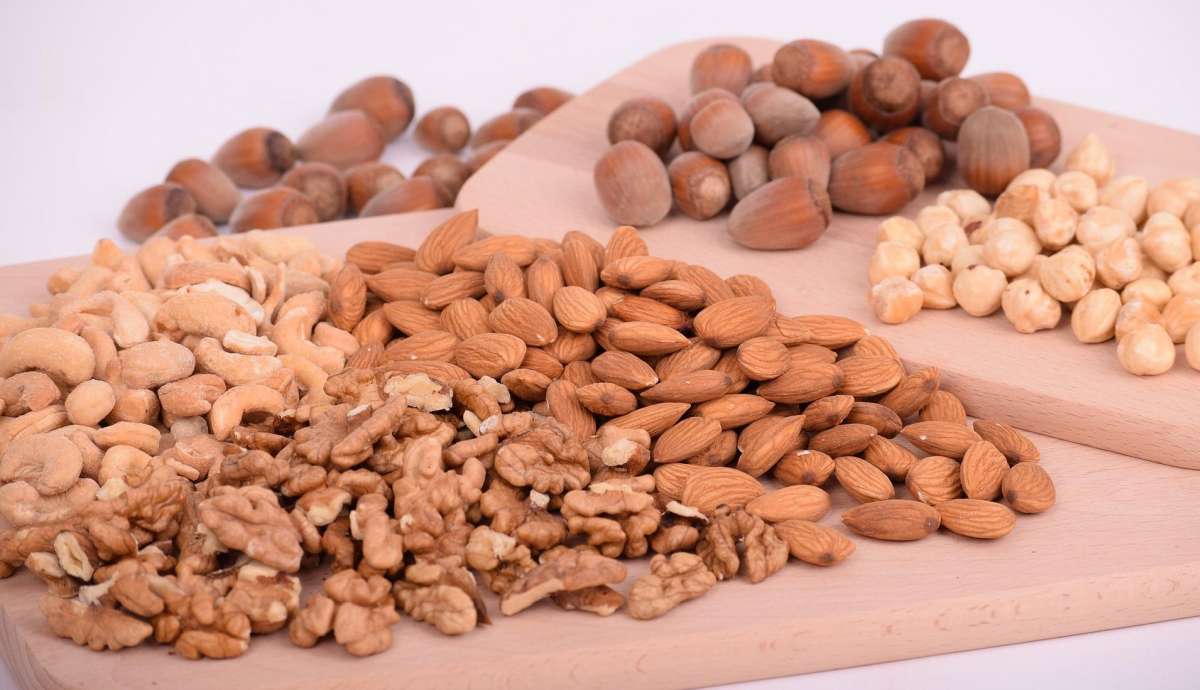
Nuts are a nutritionally very interesting food: They represent a relatively significant amount of proteins (up to 20%), are a source of complex carbohydrates, provide a substantial amount of fiber, and are also an important source of certain minerals, especially magnesium. They are generally presented as a key source of fats, where in the vast majority of nuts, unsaturated forms prevail. This is important information for everyone trying to monitor the quality of their diet, as monitoring the ratio between saturated and unsaturated fats is among the basic nutritional requirements of a balanced diet. Choosing the right combination of nuts can help reduce the excess of saturated fats and increase the proportion of unsaturated fats, which has a positive impact on health.
However, fats are also a concentrated source of energy, and they are commonly presented as a group of foods that we should limit in our diet, primarily with regard to controlling body weight.
20 g (2 polévkové lžíce)
Energie kcal:
Bílkoviny:
Sacharidy:
Tuky:
Tuky nasycené:
Tuky nenasycené:
Poměr nas. : nenas.:
Vláknina:
Vápník:
Hořčík:
20 g (2 polévkové lžíce,10 kusů)
Energie kcal:
Bílkoviny:
Sacharidy:
Tuky:
Tuky nasycené:
Tuky nenasycené:
Poměr nas. : nenas.:
Vláknina:
Vápník:
Hořčík:
20 g (2 polévkové lžíce)
Energie kcal:
Bílkoviny:
Sacharidy:
Tuky:
Tuky nasycené:
Tuky nenasycené:
Poměr nas. : nenas.:
Vláknina:
Vápník:
Hořčík:
20 g (1 1/2 polévkové lžíce,10 kusů)
Energie kcal:
Bílkoviny:
Sacharidy:
Tuky:
Tuky nasycené:
Tuky nenasycené:
Poměr nas. : nenas.:
Vláknina:
Vápník:
Hořčík:
20 g (2 polévkové lžíce,4 kusy)
Energie kcal:
Bílkoviny:
Sacharidy:
Tuky:
Tuky nasycené:
Tuky nenasycené:
Poměr nas. : nenas.:
Vláknina:
Vápník:
Hořčík:
20 g (2 polévkové lžíce,10 kusů)
Energie kcal:
Bílkoviny:
Sacharidy:
Tuky:
Tuky nasycené:
Tuky nenasycené:
Poměr nas. : nenas.:
Vláknina:
Vápník:
Hořčík:
20 g (2 polévkové lžíce,20 kusů)
Energie kcal:
Bílkoviny:
Sacharidy:
Tuky:
Tuky nasycené:
Tuky nenasycené:
Poměr nas. : nenas.:
Vláknina:
Vápník:
Hořčík:
The study published in the European Journal of Nutrition [1] found that people who include nuts in their diet are more likely to reduce weight gain and lower the risk of overweight and obesity. The results are very interesting because they evaluated dietary and lifestyle data of more than 373,000 individuals from 10 European countries aged 25 to 70 years over a period of 5 years. The diets of the monitored people commonly included readily available representatives of nuts - peanuts, almonds, hazelnuts, pistachios, and walnuts.
There are several reasons why regular consumption of these high-energy foods does not lead to overweight and simultaneously may influence weight loss:
Nuts are typically a low-glycemic food with a relatively high fiber content, which is a key source of nourishment for intestinal microorganisms. Consumption of nuts does not cause unnecessary fluctuations in blood glucose levels, and it is believed that their energy yield is proportionally lower than that of consuming oils alone.

Mgr. Martin Jelínek
Founder of NutriCourses, lecturer and author of the educational system in the field of nutrition. He has been systematically engaged in nutrition education since 1999. He is the author of the educational application ZOF and professional publications focused on nutrition and a healthy lifestyle.