
Author: Mgr. Martin Jelínek
Expertise: nutrition, education in nutrition
Last expert review: February 13, 2023

In nutrition, there are a number of rules and factors that we can divide into more and less important in their significance. Among the most important is undoubtedly the need to monitor the quantity and quality of proteins in the diet.
Proteins are a heavily discussed topic in sports nutrition. Since they are practically the most important component on the plate, their significance is exaggerated mainly by manufacturers and sellers of supplements to support the sale of protein products. An athlete unfamiliar with the subject may then get the impression that their quantity, let alone their quality, cannot be ensured by a regular diet and resorts to using protein concentrates, bars, gainers, and other sources of technologically reasonably well-processed proteins.
As this is a more complex topic that goes beyond the potential of one short article, let's look at this issue briefly and succinctly:
1. Proteins should be the first nutritional factor whose presence in the diet we monitor.
2. The quantity of proteins varies significantly between different sports. But basically, it is counted on the basis of:
A) Their percentage from the total energy intake.
On average, a range of 15-20 % is used.
B) Relationship to body weight.
Most often, it is a range of 1-1.5 g / 1 kg body weight.
Strength is an exception sports, where the need for protein (slightly) increases due to the type of load.
3. The above values for Lucka mean that her total daily protein intake will be in the range of 70-90 g.
Since the regime is based on three meals a day, it means that each plate contains 25-30 g of protein. Providing this dose is not only not a problem (which means that Lucka does not need to supplement proteins from supplements due to a lack of them), but in fact, it is a quantity that is on the plate of the vast majority of the non-sporting population as well.
4. Besides the quantity, it is necessary to monitor the quality.
This is mainly addressed from the perspective of the essential amino acids composition, where - simply put - animal sources come out best. We will not dispute this, but I will just state that with Lucka, we are walking a somewhat different path. Animal sources of proteins are considered to be strongly pro-inflammatory factors in the diet. This means that they adversely affect the diversity of the gut microbiota and contribute to the development of inflammations in the body. In situations where an athlete undergoes (literally) self-destructive preparation, in which they try to get more than the maximum out of the body, the necessity to suppress pro-inflammatory reactions that burden the immune system and significantly increase the risk of illness comes to the fore. Therefore, every athlete should ask themselves, when monitoring the quantity and quality of proteins on their plate, what is more important to them - if it's strong health that allows them to fully complete the planned load, or the extreme support of proteoanabolism, the potential of which (except for typically strength sports) they will not utilize as they read in ads for protein supplements.
In nutrition, it is therefore an (un)written rule to also monitor the ratios between plant and animal proteins, where conventional modern eating rules always state a predominating share of animal proteins. This preference is justified because it is based on the need to ensure sufficient essential amino acids but does not take into account the factor of already mentioned protein impact on health, especially with a higher protein intake in sports nutrition.
For these reasons, we focus on ensuring a slightly higher share of plant protein sources, which is not based on vegetarianism - Lucka basically has all representatives of animal protein sources in her diet but they simply do not predominate in proportion. On average, the proportional representation of animal sources moves around 30-40% - the example menu at the end of the article demonstrates this perfectly.
Speaking of protein sources, let's recap their representatives:
A) Plant sources:
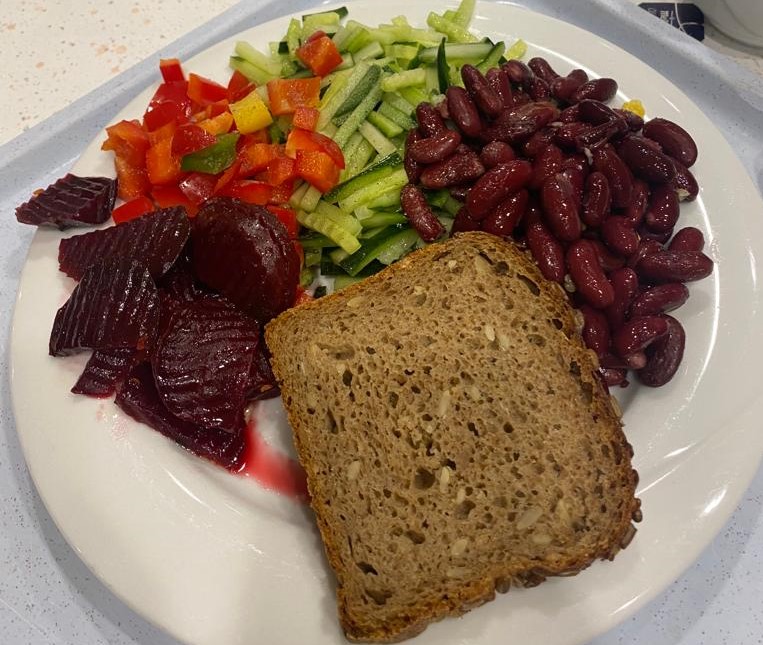 From a volume standpoint, the basics are cereals and legumes, with a certain distance, nuts and seeds.
Cereals in the form of side dishes as whole grains (most often rice and buckwheat), then once a day bread (always whole grain).
We try to have legumes on the everyday plate. For reasons of availability and digestibility, hummus and tofu are predominant, within the time possibilities Lucka works with peeled types of lentils, occasionally including beans.
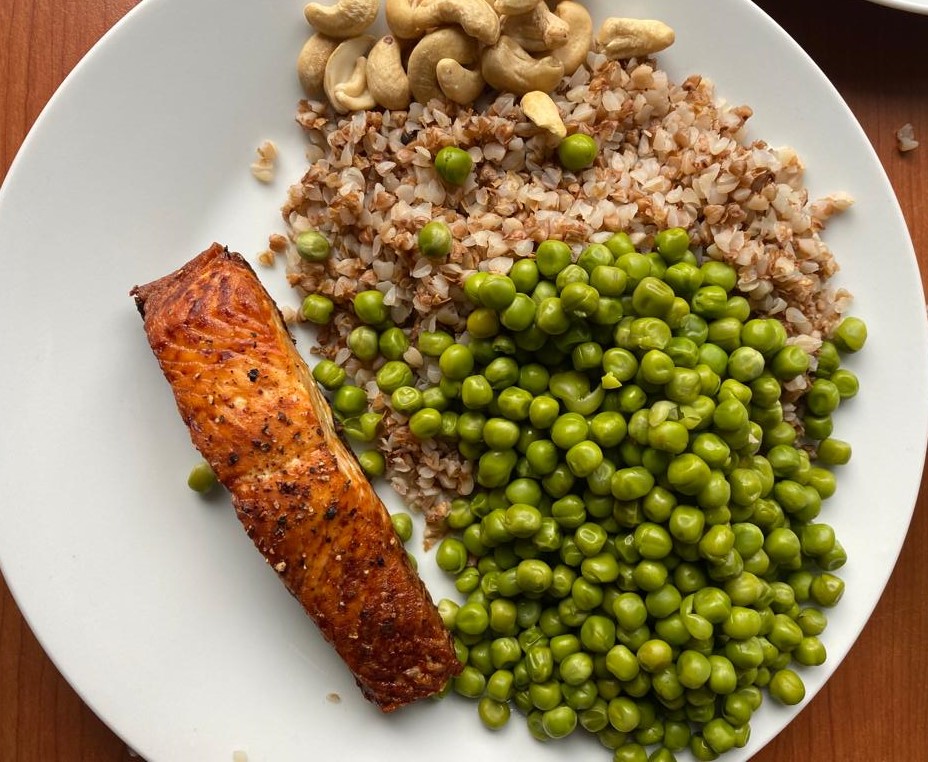 We strive for an even representation of meat, eggs, and dairy products. The theory sounds good, but in practice, it sometimes falters due to a lack of time to prepare everything that's planned.

Mgr. Martin Jelínek
Founder of NutriCourses, lecturer and author of the educational system in the field of nutrition. He has been systematically engaged in nutrition education since 1999. He is the author of the educational application ZOF and professional publications focused on nutrition and a healthy lifestyle.