
Home / All about studying / What You Will Learn During Your Studies
During your studies, you don’t just acquire more information about nutrition. You learn to make sense of it, identify connections, evaluate a diet as a whole, and turn theoretical knowledge into concrete, practical work with food. The outcome should be the ability to assess situations in a broader context and to justify your conclusions clearly.
Our courses are currently in preparation. The study system described here is the one we use in our courses. Subscribe to the NutriCourses Newsletter for new articles, practical nutrition insights, and updates when enrolment opens.
Nutrition encompasses a large amount of information about foods, nutrients, metabolism, health status, and lifestyle. Knowing individual data points is important, but they gain real value only when you can use them correctly.
During your studies, you therefore gradually learn to move from the question “What do I know about this topic?” to the questions “What does this imply?”, “What is this information related to?” and “How will I use it in a specific situation?”
It is precisely the ability to work with the knowledge you have acquired that is one of the main outcomes of the studies.
Today we have an enormous amount of nutrition information available. Individual recommendations can appear contradictory because they apply to different people, conditions, or goals.
Studying helps you build a system that enables you to place new information into context and assess its significance.
Gradually, you learn to:
The goal is to gain a firmer grasp of the subject, which will allow you to work with information you will encounter in practice after the course.
The various areas of nutrition are interconnected. A change to one part of the diet can affect its energy content, the distribution of nutrients, the composition of foods, and other characteristics.
In your studies, you therefore learn not to assess foods, nutrients, or recommendations in isolation, but to gradually track the relationships among:
The same piece of information can thus have different meanings in different situations. It is precisely the ability to recognize these differences that enables you to work with nutrition more meaningfully than through simple universal rules.
When evaluating a diet, it is not enough to focus on a single food, nutrient, or number.
During your studies, you learn to assess the diet as a whole and to perceive how its individual parts affect one another.
In evaluation you therefore work with:
It is important to pay attention not only to individual parameters, but also to how changes in them are reflected in the diet as a whole.
Theoretical knowledge alone does not determine which solution will be appropriate in a specific situation.
In practice, you need to decide which part of the diet to adjust, how, and why. Each such decision can simultaneously affect several other parameters.
During your studies, you therefore learn to consider questions such as:
You practice this way of thinking already during your studies through assignments in the ZOF learning app.
In nutrition, the same solution cannot automatically be applied to every person.
Differences may stem from age, health status, physical activity, daily routine, dietary preferences, or the goal a person wants to achieve.
When working with a specific situation, you therefore learn to ask yourself several basic questions:
Who is the recommendation intended for? Under what conditions? What is the goal? And how does it fit into the overall dietary pattern?
This way of thinking helps you avoid mechanically applying general recommendations regardless of the circumstances.
An important part of working with nutrition is the ability to explain why you chose a particular solution.
It is not enough to simply state that something is “appropriate” or “inappropriate.” What matters is understanding the reasons that lead to that conclusion.
During your studies, you therefore learn to base your decision-making on the knowledge and connections you have gained in the individual topics.
The ability to justify your own approach also helps uncover situations where some part of the reasoning is not yet sufficiently supported or where you need to return to the topic.
Individual courses differ in both scope and focus.
Comprehensive courses work with a broader range of topics and situations, while specialized courses develop knowledge primarily in a particular area of nutrition. What they have in common is the way you work with the information you have gained - you gradually connect it, verify your understanding, and learn to use it to solve specific situations.
The value of your studies cannot be measured solely by the amount of facts you remember.
What matters most is whether you can:
These are the very abilities that enable you to use the knowledge you have acquired even in situations that were not directly part of a particular lesson or practical assignment.
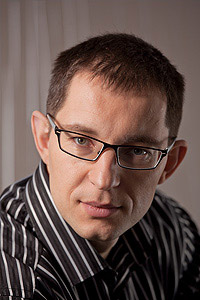
Mgr. Martin Jelínek
Founder of NutriCourses, lecturer and author of an educational system in the field of nutrition. He has been systematically engaged in nutrition education since 1999. He is the author of the educational application ZOF and professional publications focused on nutrition and a healthy lifestyle.
We are preparing the courses now. Subscribe to Newsletter and we'll keep you informed about new educational content and upcoming course launches.
You can unsubscribe at any time.
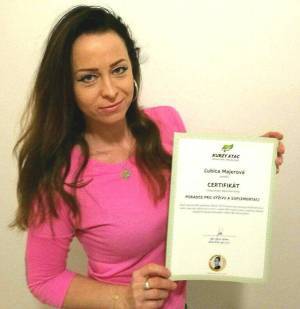
Ľubica Majerová
The course by Martin Jelínek is the best choice I could have made because I believe it is the highest-quality course in the field of nutrition and counseling. The online study format suited me well; working with the website is simple and straightforward, and the game ZOF is very educational. The information I learned during the course will benefit me for a lifetime, providing an excellent foundation for further development in the field of healthy nutrition. I am grateful to Mr. Jelínek for his willingness to share his valuable knowledge and experience with the rest of us.
Jindra Němcová
I would like to express my heartfelt thanks for the absolutely amazing ALL IN nutrition course. In the past, I dreamed of such a course concept, and suddenly, I found it for my own self-education. The course was a bit challenging for me since I generally have a very tight schedule during the day and am a full-time working mother. I also gave up gym workouts for six months because of it. One always has to sacrifice something. Although there wasn’t a need to study that much each day, creating the map afterwards took up quite a bit of space - but I really enjoyed this part. I am tremendously grateful for such an abundance of new and useful information and would honestly say that the course could even cost more; I am absolutely satisfied. I must certainly agree that mind maps are essential for better retention and understanding of the material, and I highly recommend everyone to make them. Now, I want to focus on applying everything in practice to start helping people around me, as the percentage of people with illnesses and obesity in the world is still on the rise. Therefore, good advisors and people who are passionate about nutrition and want to help others are definitely welcome. Once again, thank you very much, Mr. Jelínek.
Ing. Helena Dlouhá
30 years ago, I started to be interested in nutrition… I get married and I wanted to know, how to cook. I was looking for context – why, how and so on :-). I was looking in cookbooks, and vegetarian and macrobiotics cookbooks… I went through various periods, I gained various experience and I also found interesting connections – between our food and mind. I was interested in this topic. However, it is not easy to create one balanced whole from all that various information from different authors. Every man is different. What applies for one, is impossible for other one. And there are so many truths about nutrition, and each of them is different. In the course of time, I almost resigned. However, all happens in good time. My friend told me about Martin Jelínek. After certain period of time I enrolled at his course. I don′t believe in accidents, so – thank you, destiny. Martin Jelínek succeeded to create self-contained and functioning picture from those small pieces of information. Everything started to mesh like puzzle. I am skeptical person and I look at everything from many sides and I want to know why and how, before I accept it. I know, sooner or later, I will have more questions, but I also know within which context I will look for answer. Why did the course speak to me? Holistic perspective. It didn′t favor any diet school, any author. Martin Jelínek doesn′t condemn anybody and doesn′t make a fuss of anybody. He uses logic – however his logic is compatible with thinks that are incalculable and immeasurable. In the beginning, it wasn′t easy to sense the personal nutritional posture of Martin Jelínek. Today, I think that I suppose that – and I understand why he is so impartial in certain things. It is valuable to create own view on certain thing that is not affected by opinions of a teacher. Ideally, teacher should help to keep our thinking within certain framework. Regarding this view, we had ideal teacher… and in other views as well :-) Thanks to this course I realized that there is no place for resignation in my life; that I enjoy nutrition and I want to deal with this issue. Ain′t it great?