
Home / All about studying / How We Connect Theory with Practice
Theory only becomes meaningful in your studies once you can use it. That’s why selected lessons are followed by practical tasks in which you design meal plans for specific situations, track the impact of your decisions, and, after completing the assignment, receive a sample solution with commentary and additional follow-up study materials.
Our courses are currently in preparation. The study system described here is the one we use in our courses. Subscribe to the NutriCourses Newsletter for new articles, practical nutrition insights, and updates when enrolment opens.
While studying nutrition, you gradually become familiar with a large amount of information. You learn about nutrients, foods, energy balance, health implications, and the differing needs of various groups of people.
However, merely knowing this information does not yet mean you can use it correctly when creating a meal plan.
The situation is different when you receive a specific assignment - to create a full-day meal plan for a person with certain parameters and a goal.
In such a moment, it is no longer enough to work with individual pieces of information separately. You must integrate them and apply them in context when making specific decisions.
That is precisely why assignments are an integral part of our teaching approach.
We do not include assignments separately from theory; they build on the topics you are currently studying.
First, you become familiar with a given topic in a study lesson. For selected lessons, you then receive an assignment in which you use the new information to create a specific meal plan.
This way, you do not have to just imagine how a given recommendation might look in practice. You can try applying it yourself.
In our courses we use the educational application ZOF.
The student receives a specific assignment for a model person, including their body parameters, health status, physical activity, nutrition goal, and other requirements; their task is to compile a full-day meal plan corresponding to the given situation.
Assignments tend to focus on:
First, you create your own solution. You will only access the sample meal plan after you meet the requirements of the specific assignment.
We explain the detailed functioning of the application itself in the article Working with Meal Plans in the ZOF App.
It is in practical work that it becomes clear why it is not enough to assess individual pieces of information in isolation.
For example, if you add a certain food to the meal plan or remove it, it may not be only the parameter you originally wanted to affect that changes; changes occur in:
Therefore, when creating it, you gradually adjust individual parts and observe how each change affects the outcome.
A sample meal plan with commentary becomes available to the student only after completing the practical assignment. First, they look for their own solution, which they then compare with the sample version, thereby better understanding different possible approaches.
The sample solution is followed by additional study materials, which expand the topic with further context and help consolidate the acquired knowledge.
The result is not just an answer to the question "Did I meet the assignment?", but also an opportunity to look at the problem from another angle.
We include assignments where they help to better understand the topic and translate new knowledge into concrete practice.
Therefore, some lessons primarily contain a theoretical foundation, while others build on it with work in ZOF.
This also keeps the time demands of study within reasonable limits. Creating a quality meal plan requires more time than simply reading a lesson, and therefore it makes no sense to add a practical assignment to every topic.
When reading a lesson, a certain principle may seem clear at first glance. However, only when you apply it does it sometimes become apparent that some part has not yet been sufficiently understood.
For example, you may find that by adjusting one parameter you have simultaneously disrupted several others. You therefore need to go back to the previous decision, look for another option, and observe the new outcome.
Such a situation provides important feedback during study and helps reveal which connections require further attention.
It is in solving it yourself that you clearly recognize the difference between having read the information and actually being able to use it.
Working with model assignments does not have to be the final level of practical application of knowledge.
In the courses Nutrition and Supplementation Consultant and Nutrition in Sport, students also complete a term paper at the end of their studies based on a practical consultation with a specific person.
During the course, they first gain experience with model situations and then must use a broader set of acquired knowledge to solve a more complex assignment.
If assignments are part of a particular course, completing them is among the study requirements needed to obtain a certificate.
They are just as important as other parts of the study - lessons or tests - because they verify whether you can apply the knowledge you have acquired in practice.
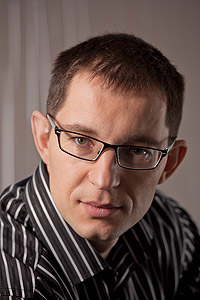
Mgr. Martin Jelínek
Founder of NutriCourses, lecturer and author of an educational system in the field of nutrition. He has been systematically engaged in nutrition education since 1999. He is the author of the educational application ZOF and professional publications focused on nutrition and a healthy lifestyle.
We are preparing the courses now. Subscribe to Newsletter and we'll keep you informed about new educational content and upcoming course launches.
You can unsubscribe at any time.
Aleš Velich
I discovered the highest value after some period of time and more experience. Complex and impartial view on quality and variety of nutrition was the highest value for me. My awareness about possibilities of evaluation and perspective on body and personality were expanded. Only body of a client knows what is the best for him – it is the greatest truth. Each person is different and went through different evolution and each person needs varied and abstemious nutrition.

Petra Nela Szerencsés
I have been dedicated to specialized nutrition for several years. My own health issues and those of my daughter led me to the path of nutrition. Over the past few years, I have completed several nutrition courses and I must sincerely say that the Nutrition and Supplementation Advisor course has enriched my knowledge in a truly high-quality way, and I consider it my best nutrition study to date. This course is truly excellent in content and also very well organized. Mr. Jelínek's approach is incredibly professional, and he always answers, advises, and explains. He is a true expert whom I respect greatly. This course has truly helped me start perceiving health in a completely different way. It is incredibly important to approach nutrition very individually. As I believe that one must pay extreme attention to this work, continuous ongoing education in the field of nutrition is undoubtedly very important. Therefore, I also plan to continue studying more courses with Mr. Jelínek. Respectfully, Petra Nela

Lucie Němečková
Twelve years ago, I started to take up interest in healthy lifestyle because of chronic health problems. Nutrition quickly became my greatest hobby and recently also my profession. I was looking for course that could give me another inspiration, information, and personal development opportunity in this field. Without exaggeration, course of Martin Jelínek exceeded my expectations thanks to its wide range of information, professionalism, well elaborated materials that I use within my practice, and chance of consulting and further development.