
Home / All about studying / What a Typical Study Day Looks Like
One study day can take different forms depending on the course, the topic, and how much time you have at the moment. The core activity is working with a new lesson, which may be followed by a mind map, a practical assignment in ZOF, a practice test, or asking a question in the Q&A forum. Not all of these parts are included every day, and it isn’t necessary to complete them all at once.
Our courses are currently in preparation. The study system described here is the one we use in our courses. Subscribe to the NutriCourses Newsletter for new articles, practical nutrition insights, and updates when enrolment opens.
Once you log in to your study account, you continue with the next lesson at your own pace and according to your available time.
If you have more time, you can progress faster. During busier periods, you can slow down or pause your studies for a while.
You work through the lessons gradually so that individual topics build on one another logically.
The lesson itself is the foundation of each study block. As you work through it, you learn new information, connect it with previous topics, and gradually build a broader understanding of the subject.
Some parts may be simple and easy to understand, while others may require more time or a return to previously covered material. Your pace therefore does not need to be the same for every lesson.
If this way of working suits you, you can create a brief mind map after completing the lesson.
You can use it to record the main points of the topic and the relationships between them. When reviewing the material later, you do not always need to go through the entire lesson again and can quickly refresh its structure instead.
Creating mind maps is optional. Each student can choose the note-taking and review method that works best for them.
Some topics are linked to an assignment in the ZOF learning app.
You receive specific requirements for a model client and use them to create a meal plan. As you work, you can see how individual changes affect its overall composition and whether the result meets the assignment criteria.
After successfully completing the assignment, you gain access to a sample meal plan with commentary and additional study materials.
Practical assignments are not included in every lesson. We use them where they help you understand the topic more deeply and apply it to a specific situation.
Individual lessons are followed by practice tests that help you check whether you have understood the main parts of the topic correctly.
The test is not only a form of assessment. It can also highlight parts of the material that may be worth reviewing.
If you answer a question incorrectly, you can return to the relevant topic and repeat the test later.
Summary tests have their own place within the course and are not part of every study day.
While studying a lesson, working in ZOF, or taking a test, you may come across a question that is not fully answered in the study materials.
In that case, you can use the online student advisory forum and contact the instructor directly.
The forum is there for situations where you need a topic explained in more detail, want to check your understanding, or ask about a connection that came to mind while studying.
A “study day” does not mean that you have to complete all related activities within a single calendar day.
If you have less time, you can focus only on the lesson and return to the assignment, test, or other activities later.
You decide the pace yourself, so you can divide the individual parts of your studies according to your available time and continue when you have enough space to focus on them.
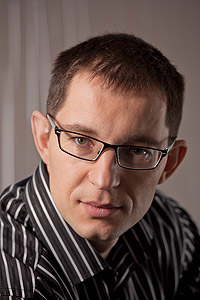
Mgr. Martin Jelínek
Founder of NutriCourses, lecturer and author of an educational system in the field of nutrition. He has been systematically engaged in nutrition education since 1999. He is the author of the educational application ZOF and professional publications focused on nutrition and a healthy lifestyle.
We are preparing the courses now. Subscribe to Newsletter and we'll keep you informed about new educational content and upcoming course launches.
You can unsubscribe at any time.

Bc. Dagmar Peková, BSBA
When I was thinking about organizing information of healthy nutrition that provides energy to body and soul, and wish to pass my knowledge, I was looking for a course that would connect these demands. I know about course of Martin Jelínek from several sources that were very positive. Anyway, it wasn′t so unequivocal for me, but something drew me in. During the first lesson I realized that I am on the right place and my decision was right. This feeling didn′t change, but deepened. Course contains a lot of information, but it is very comprehensible and amusing. I want to thank Mr. Jelínek for all information and genuine approach and support in my next professional branch, e.g. in the form of quick answer on my questions :-)
Jan Pinker
It is impossible to write a negative reference for ATAC Courses and it's not possible to list all the positives in just one sentence. This is because Mr. Jelínek's approach is absolutely, perfectly brilliant, whether in lessons or when you need personal advice. I'm very glad that I decided to take the course here. I dare to say that this is the only educational center that has met all my expectations, and since I have successfully completed two courses here, I know that this is not the end.

Ing. Irena Kašpárková, PhD.
By completing the Nutrition and Supplementation Advisor course, I gained a wealth of detailed information. I particularly liked that the issues were finally explained from a chemical perspective, which was missing in many publications I had read. Finally, someone explained why it is the way it is. It truly caters to everyone, both experts and laypeople. Thanks to well-structured tests and the method of mind maps, I was able to permanently remember a lot of things. I will continue to pursue consultancy as a nutrition advisor in a women's gym. I think I made the right choice—this course has received positive feedback, and I hope to give it good publicity.