
Author: Mgr. Martin Jelínek
Expertise: nutrition, education in nutrition
Last expert review: September 3, 2024

Imagine going shopping with the desire to purchase genuinely healthy foods that will form the foundation of your daily eating. You wander through the supermarket, eyeing the shelves and pondering whether the bread, pasta, canned goods, meat, yogurts, cheeses, eggs, cereals, and many other foods are truly of corresponding quality, or if by buying them, we are merely becoming victims of a conspiracy of the food industry. We all know it – the packaging of individual products is beautifully colorful and filled with cheerful motifs, loudly advertising the advantages of the product. Who could resist?
Unfortunately, situations arise where most people, due to a combination of advertising influences, food tastes, and a lack of basic knowledge about balanced nutrition, fall into a desperate rut. This looks like certain food groups prevail. Most commonly, meat and dairy products, sweets, and foods with gluten content. On the contrary, foods like vegetables, fruits, or legumes are lacking.
Despite the existence of countless nutritional theories that often differ significantly in their recommendations, it generally holds that the diet should be varied. Adhering to this rule begins first with the selection of foods and basic ingredients for meal preparation. There are essentially 9 basic groups of foods that we can eat. „We can eat“ means that our body can digest and process them. We are not yet evaluating whether some foods are more suitable than others, let's just look at their distribution:
 They are divided into gluten-containing (they contain the protein gluten – wheat, rye, oats, barley) and gluten-free (they do not contain the protein gluten – such as rice, buckwheat, corn, millet, amaranth, quinoa, etc.). Gluten-containing grains are more difficult to digest, and some people have an increased sensitivity or even an allergy to gluten, therefore it is advisable to limit them in the diet in many cases.
Grains are most commonly processed into flour or flakes. In everyday foods, we encounter them in products like bread, muesli, cookies, cakes, pastries, dumplings, pasta, popcorn… The spectrum of such manufactured products is inexhaustible. The method of processing and additional substances used (additives) then determine how suitable such a food is for us.
The fact is that in our conditions, these are the most consumed foods ever. The higher their share in the daily diet, the more the metabolism deviates from equilibrium.
Generally speaking, we should keep an unnecessarily high intake of gluten-containing grains under control in our daily dietary approach, balancing them with gluten-free sources.
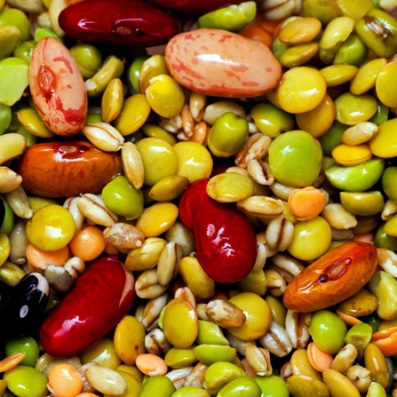
Commonly known legumes include lentils, peas, beans, chickpeas, soybeans, peanuts…
This group of foods is not as popular and widespread as the grains mentioned above (exceptions are, for example, Indian or Mexican cuisine). The reason is mainly their reputation as causing bloating foods. This is due to the content of antinutrients. These are components that complicate the digestion process in a specific way – they hinder the absorption of some nutrients, or they are directly indigestible for humans. On the other hand, legumes are a very rich source of many important nutrients, such as proteins, fiber, and fats. Their deficiency also manifests in the development of health complications. Legumes have the potential to be a common part of daily diet, but it's necessary to learn how to prepare them correctly – always primarily with the goal of minimizing the content of problematic antinutrients, achieved by peeling, soaking, sprouting, fermentation, longer cooking, or using a variety of spices.
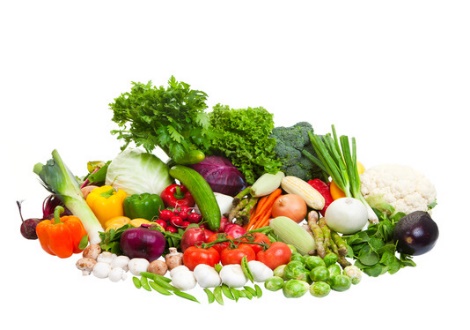
The range of vegetables is indeed wide. For nutritional purposes, it makes sense to divide them into root vegetables (carrot, parsley, potato, garlic, onion, celery, and others) and above-ground vegetables (broccoli, celery stalk, greens, lettuce, cabbage, cucumber, bell pepper, eggplant, kale, etc.).
Vegetables should be an essential part of our daily diet. The reasons are many, with the most significant being the high fiber content, vitamins, and antioxidants. Due to the high fiber content, it can increase the volume of the diet. This is important for this and other reasons because the energy content in vegetables is minimal, and its presence in the diet in sufficient quantities does not significantly affect the energy balance. Vegetable consumption is completely insufficient in most Western countries. Unfortunately, its availability in appropriate quality is not the best either.
We should consume vegetables preferably with savory dishes, at least twice a day in raw, cooked, and fermented forms.
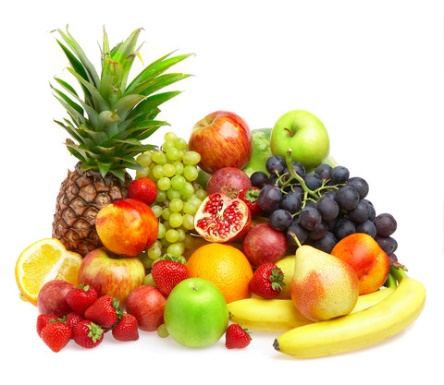
With fruits, we should distinguish whether they come from our geographic latitudes (apples, pears, plums, apricots, peaches, currants, strawberries, raspberries, gooseberries, etc.), or from exotic regions (bananas, oranges, mandarins, grapefruit, kiwi, pineapples, etc.).
Like vegetables, fruits are also rich in fiber, vitamins, minerals, and antioxidants. All in all, it has slightly different characteristics than those of vegetable representatives, which also dictates the possibilities of working with it in daily nutrition.
Generally, it is advisable to consume fruit as part of sweet dishes, at least once a day. Furthermore, the ratio between the volume of vegetables and fruit should be approximately in the range of 2-3:1 each day.
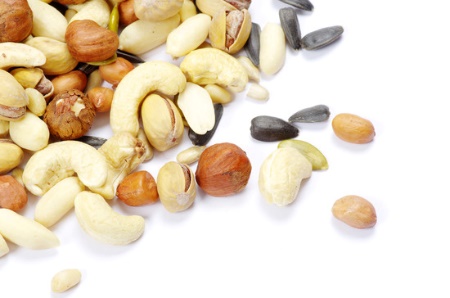
This group of foods is a very concentrated source of nutrients. The minimal water presence helps this. Similar to legumes, this group also contains a significant presence of proteins and fats. Also noteworthy are the minerals (calcium, magnesium, etc.) that significantly influence metabolic processes. Typical representatives include almonds, poppy seeds, flax seeds, walnuts, cashews, pumpkin seeds, sunflower seeds, sesame, and many others.
Tragically, most people associate nut consumption with peanuts, which are among the most health-risky (primarily due to their quality – excess salt, mold content, and rancid oil).
Due to the highly attractive nutrient profile, it is advisable to consume nuts and seeds at least once a day.

In comparison with other food groups, mushrooms are not packed with nutrients. Even so, they can provide the body with a number of significant substances, among which fiber and certain minerals are the most significant. It is crucial to thoroughly cook them to improve their digestibility.

These are cow, sheep, or goat milk products: Butter, cheese, yogurts, curd, buttermilk, kefirs…
Due to diverse manufacturing processes, among them are foods of varying quality, which dictates their suitability for consumption. For several reasons, dairy products are increasingly promoted today, and their consumption is unfortunately rising at the expense of other food groups that, on the contrary, are lacking in the diet. This then leads to an increased risk of some health issues, which are most often associated with an excess of fats, lactose (milk sugar), or proteins (casein, whey).
An integral part of the philosophy of balanced nutrition with a holistic approach should be the effort not to consume animal dairy products as often as is promoted today. For healthy individuals, once a day is sufficient.
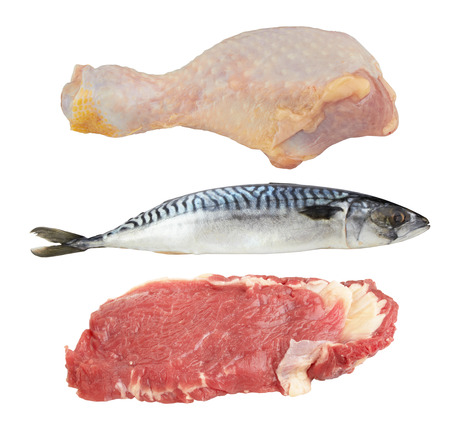
Chicken, turkey, pork, beef, lamb, rabbit, carp, pike, salmon, trout, zander, seafood (shrimp, mussels, octopus, etc.).
They are used in fresh or various preserved forms, from which their quality also stems. It is always wiser to focus on lean meat with lower fat content, which only increases its energy content and supports weight gain or cardiovascular problems. A small exception is fish, where the composition of fats is specific with a higher content of so-called omega-3 fats, which have a positive effect on the cardiovascular system. The quality of fish, especially those on farms, is a highly discussed topic. The reason is the high concentration of animals with the risk of stress factors arising, along with the quality of feeding mixes.
Even regarding meat, it is wise to keep consumption within reasonable limits, preferably a maximum of once a day. In the case of vegetarianism or veganism, meat is fully replaced by plant sources, especially with legumes, nuts, seeds, and grains.

Predominantly chicken eggs, occasionally quail or in extremes ostrich.
Apart from direct consumption, eggs are processed into various other foods – sweets, pasta, mayonnaise, etc.
In this regard, a similar recommendation applies as with meat. We generally consume too many eggs, most often in their hidden form as part of technologically processed foods. Usually, in alignment with the principles of variety and balance, their consumption is recommended in quantities corresponding to approximately 6-10 eggs per week for an adult.

Mgr. Martin Jelínek
Founder of NutriCourses, lecturer and author of the educational system in the field of nutrition. He has been systematically engaged in nutrition education since 1999. He is the author of the educational application ZOF and professional publications focused on nutrition and a healthy lifestyle.