
Author: Mgr. Martin Jelínek
Expertise: nutrition, education in nutrition
Last expert review: September 3, 2024
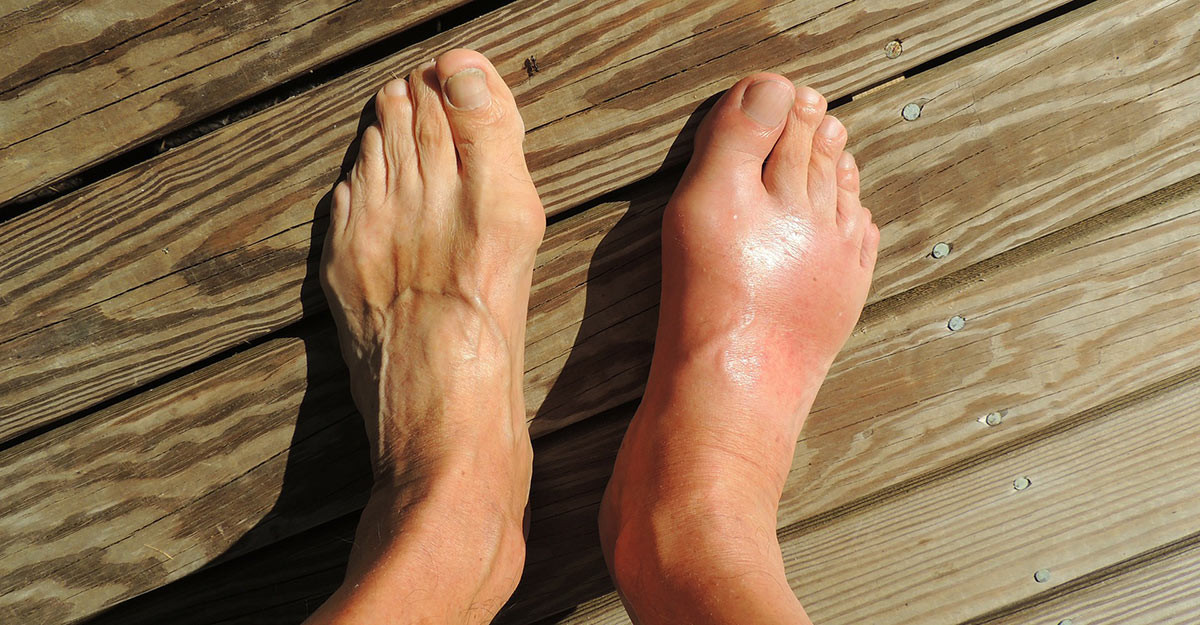
Gout is a form of arthritis (an inflammatory joint disease) caused by uric acid crystals deposited in joint tissue. Uric acid is the end product of the metabolism of purines, which are found in greater quantities in certain types of food, with the richest sources being organ meats, game, anchovies, sardines, poultry, seafood, or legumes.
Usually, the issue affects only one joint, most commonly the big toe, but the problem can also occur in the ankles, knees, wrists, and finger joints. Since humans do not produce the enzyme uricase, which has the ability to dissolve uric acid crystals, they are obliged to limit the intake of purines in their diet when gout occurs.
The most common causes of gout are hereditary conditions. However, there are factors that promote its onset, the most significant of which include:
Most often (in 80-90% of cases), men aged 40-50 years are affected. The disease manifests as painful attacks accompanied by a swollen joint, and hot red skin. Occasionally, they may be accompanied by fever (often these problems come after excessive physical exertion, meat consumption, and alcohol consumption). In an advanced stage of gout, so-called tophi (uric acid deposits, which usually appear as large lumps on the hands) form in some parts of the body. Severe gout can also cause the formation of kidney stones, for example.
Gout is diagnosed when blood tests show a high level of uric acid and a joint is affected. Medications are usually prescribed to promote uric acid excretion, thereby slowing the formation of its crystals.
The concept of diet has crucial importance for the development and course of gout. The diet must be adjusted with the goal of:
1. Reducing the purine content in foods.
It is generally recommended to exclude foods containing more than 150 mg of purines (in 100 grams of the given food) from the diet and to prefer those containing less than 50 mg of purines.
2. Adjusting the acid-base balance.
It is advisable to eliminate foods from the diet that burden the acid-base balance with acidic reactions. This includes coffee, alcohol, sugar sources, or an excess of meat and grain flour.
3. Adjusting body weight.
A common cause of gout attacks is being overweight. In weight reduction efforts, it is desirable to avoid drastic diets in terms of too rapid weight loss, because the sudden restriction of food intake causes increased production of uric acid in the blood after a few days.
4. Ensuring the intake of nutrients that can prevent the onset of attacks.
This is particularly relevant for sources of pantothenic acid (vitamin B5) and vitamin E, the lack of which increases the level of uric acid in the blood. A similar effect is obtained from the consumption of strawberries and cherries. An interesting option is apitherapy, where bee venom is applied, which acts anti-inflammatory and supports the immune system.

Mgr. Martin Jelínek
Founder of NutriCourses, lecturer and author of the educational system in the field of nutrition. He has been systematically engaged in nutrition education since 1999. He is the author of the educational application ZOF and professional publications focused on nutrition and a healthy lifestyle.