Protein Mania - How Much Protein Do We Really Need?
Protein has been in the limelight lately – added to everything from yogurt to baked goods, and more and more people are buying protein shakes and bars…

|
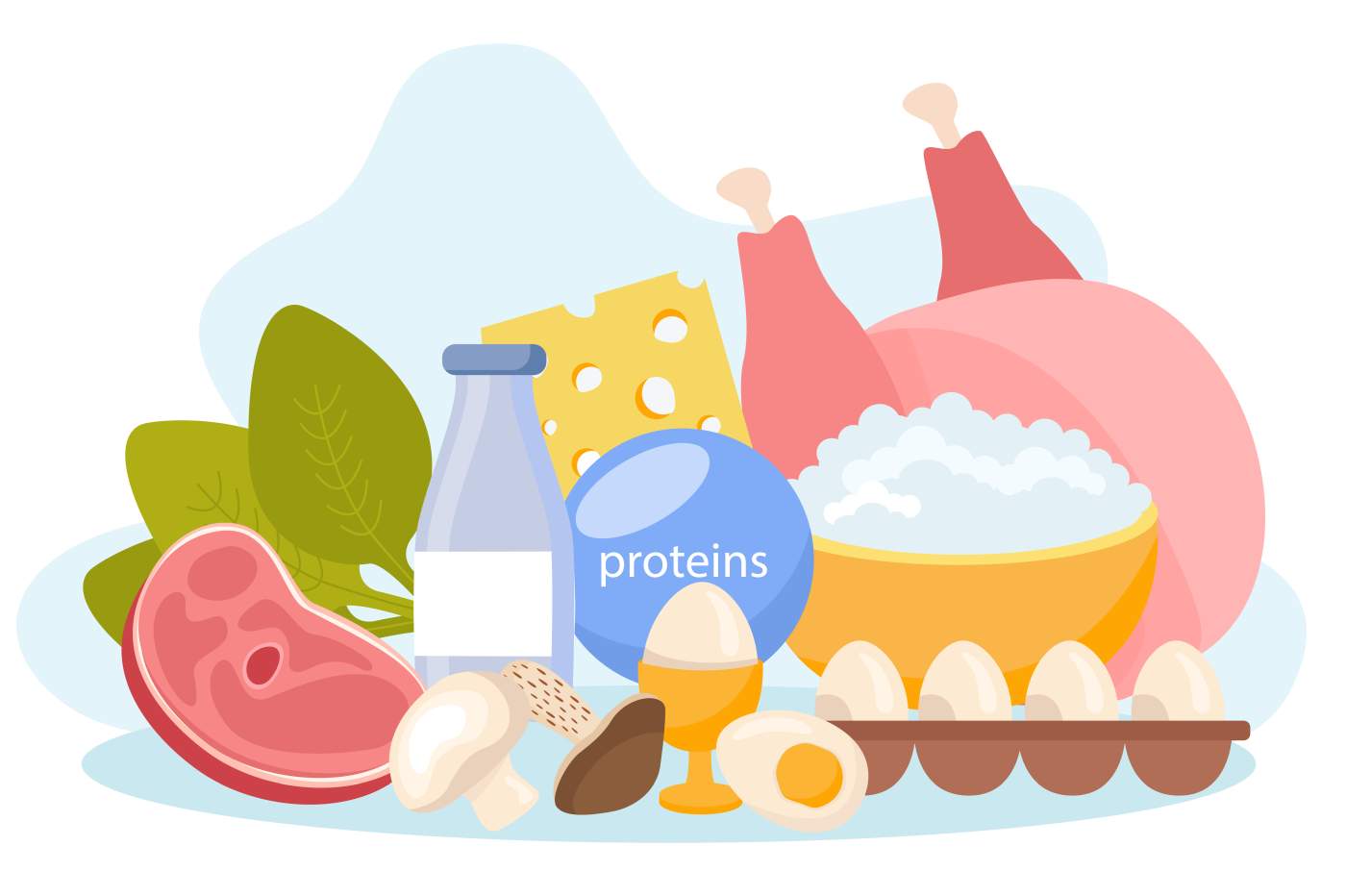
Hello,
protein has been in the limelight lately—it's being added to everything from yogurt to baked goods, and more and more people are buying protein shakes and bars. In this newsletter, we will look at why protein has become such a phenomenon, how much protein we really need and whether it makes sense to constantly increase its intake. You will learn the science-based facts about the recommended amount of protein, how to easily cover your needs with your regular diet, and when (and if at all) it makes sense to use protein supplements.
|
|
|
Proteins in nutrition
Today, the hunger for protein is reflected on social networks and in numbers. A prime example is data from overseas, where for example in the US during the last year increased protein intake by 61% of consumers and the number of protein shakes and high-protein drinks in the market increased between 2020 and 2024 by 122 %.
The fact is that proteins are the basic building blocks of muscles, bones, skin and organs and are necessary for the production of enzymes and hormones. Sufficient intake of them helps maintain the proper functioning of the body, supports regeneration and, among other things, induces a feeling of satiety. For the average adult, roughly 0.8-1 gram of protein per 1 kg of body weight per day is recommended. It is true that if the situation allows us to consume a full spectrum of protein-rich foods (meat, eggs, dairy products, legumes), there should be no problem in taking this amount regular diet. Pregnant and breastfeeding women, active athletes and seniors may have a slightly higher need, but it is still true that natural foods are the ideal and at the same time sufficient source of protein.
But today's wellness culture tends to overestimate the real need for protein. Analyzes show that most people consume not only enough, but often too much protein - the average protein intake in developed countries is already significantly higher today exceeds the recommended values. Interestingly, this shift towards higher consumption is evident across a number of economically strong regions.
So does it make sense to eat more protein?
The organism will use only a part of the received proteins to restore and build tissues. It breaks down the excess into components that it can use as energy, or they are further processed by a will exclude. Consuming protein above a certain limit no longer confers additional benefit – for example, a meta-analysis focusing on the relationship between protein intake and muscle growth showed that doses greater than 1.6 g of protein per kg of body weight they do not contribute during strength training no more muscle gain. A very high protein intake leads to an increase in filtration in the kidneys and to more intense excretion of nitrogen and calcium. Although there is usually no risk of acute damage in healthy individuals, unnecessarily high doses of protein represent only extra work for the body.
So what attitude to take to the protein mania so widespread today?
Experts agree that the foundation should always form varied menu. If we are able to obtain the necessary proteins from ordinary food, protein supplements are not necessary. In addition, real food supplies the body with additional nutrients and keeps the body full longer than an isolated protein shake. Protein preparations can make sense in specific situations, for example for elite athletes in intensive training, for people with a higher need for protein (e.g. in recovery) or for those who cannot manage to eat enough food during the day. But for the average person, expensive protein mixes are not a magic shortcut to muscles or better health, because a quality solid diet will provide everything needed. Proteins are important, but more is not always better. It is important to find the optimal income corresponding to individual needs and focus on quality sources of protein rather than mindlessly chasing the highest possible numbers.
|
|
|
|
Read:
Proteins in context
The topic of protein hides a number of interesting aspects - from how the body actually processes it, to the differences between individual sources and the changing requirements at different stages of life. A clearer understanding of how proteins work in practice often reveals connections that are easily missed in the normal search for information.
|
|
|
|
Practical tip:
Simple habits for every day
Protein is not just the domain of athletes or an ingredient that needs to be increased headlong. If you know how to treat them in your daily diet, they will become a unique health-promoting tool:
- Include protein in every main meal:
It will help you cover your daily needs in a natural way and at the same time such food will fill you up better.
- Prefer natural sources over supplements: Quality meat, fish, eggs, dairy products or legumes will provide protein together with fiber, vitamins and minerals, unlike isolated powders.
- Plan smart protein-rich snacks: For example, Greek yogurt with nuts, cottage cheese, hummus with whole wheat bread or a handful of nuts. Such snacks will keep you full longer and contribute to your overall nutrient intake.
- Don't be fooled by the "protein" marketing on the packaging: Inscription protein does not automatically mean healthier food. Always monitor the overall composition of the product. Often, a protein bar can also have a lot of added sugar and saturated fat.
- Increase your protein intake wisely: If you want to gain muscle or lose weight, don't chase the highest possible number. Instead of extreme doses of protein, focus on regularity of diet, sufficient exercise and regeneration, which are equally important factors for results.
|
|
|
|
Nutrition in Q&A:

We choose from questions from Counseling, which is an integral part of our courses. Answers that inspire, explain and can help you on your way to a healthier life.
Question:
Does it make a difference when during the day I eat protein? Does their distribution somehow affect protein utilization or muscle growth?
Answer:
The timing of protein intake matters more than is often assumed. The body can effectively use only a certain amount of protein at a time, so it is advantageous to divide their intake into several meals during the day. In practice, it is proven that each main meal contains approx 25-30 grams of protein, possibly 0.25-0.4g of protein per kilogram of body weight per serving. Such an even distribution - breakfast, lunch, dinner and possibly one small snack - supports better regeneration, maintenance of muscle mass and, for physically active people, its building.
At the same time, it helps maintain a more stable energy level and a longer feeling of satiety, which is appreciated by anyone trying to lose weight or maintain a balanced diet. In practice, it is not only the total daily amount of protein that matters, but also how you break it down during the day.
|
|
|

|
have a nice day
Mgr. Martin Jelínek
|
|
|
|

When, at the beginning of my career as a nutritionist, I was deciding which course to choose from the plethora of "nutrition commercials" (so that I wouldn't end up with just
"on paper" but also gained something extra in the form of quality information), I was then recommended for Atac courses. Because I am an analytical person, from the beginning I saw one big disadvantage in "Atac" in the form of the fact that, unlike other training companies, only one teacher conducts the entire course.
I found out very quickly that this is a big advantage, because the lecturer is the person of Martin Jelínek. In my opinion, one of the most comprehensive nutrition experts in our country, and I dare say that quite possibly the best trainer and teacher ever. I respect him for his great professional insight and am grateful for the opportunity to further my education.
Jakub Pribyl
|
|
Follow us
Facebook
Instagram
YouTube
|
ATAC spol. s.r.o.
Obrovského 2138/12, 710 00 Ostrava
|
Unsubscribe
|
You received this email because you subscribed. If you haven't done so, write to info@kurzyatac.cz.
|
|
© 2025 ATAC spol. s.r.o. All rights reserved.
|
|
Back to Newsletter Archive
<!doctype html>
<html lang="en" xmlns="http://www.w3.org/1999/xhtml" xmlns:v="urn:schemas-microsoft-com:vml" xmlns:o="urn:schemas-microsoft-com:office:office">
<head>
<meta charset="utf-8">
<meta name="viewport" content="width=device-width, initial-scale=1.0">
<meta http-equiv="X-UA-Compatible" content="IE=edge">
<meta name="x-apple-disable-message-reformatting">
<meta name="format-detection" content="telephone=no,address=no,email=no,date=no,url=no">
<title>Courses ATAC Newsletter</title>
<!--[if mso]>
<noscript>
<xml>
<o:OfficeDocumentSettings>
<o:AllowPNG/>
<o:PixelsPerInch>96</o:PixelsPerInch>
</o:OfficeDocumentSettings>
</xml>
</noscript>
<![endif]-->
<style>
/* ----- Reset + helpers ----- */
html, body { margin:0 !important; padding:0 !important; height:100% !important; width:100% !important; font-family:Arial, sans-serif; }
* { -ms-text-size-adjust:100%; -webkit-text-size-adjust:100%; }
table, td { mso-table-lspace:0pt !important; mso-table-rspace:0pt !important; }
img { -ms-interpolation-mode:bicubic; border:0; outline:none; text-decoration:none; display:block; }
a { text-decoration:none; }
/* ----- Container ----- */
.email-bg { background:#ddd; }
.wrapper { width:600px; margin:0 auto; }
.content { background:#ffffff; }
.px { padding-left:24px; padding-right:24px; }
.py { padding-top:24px; padding-bottom:24px; }
.py-2 { padding-top:24px; padding-bottom:20px; }
.py-sm { padding-top:16px; padding-bottom:16px; }
.muted { color:#6b7280; }
.heading { font-size:24px; line-height:32px; font-weight:700; margin:0; color:#111827; }
.subheading { font-size:20px; line-height:26px; font-weight:600; margin:0; color:#111827; }
.text { font-size:16px; line-height:24px; color:#111827; margin:0; }
.text p { margin-bottom: 1em }
.text a { text-decoration: underline }
.small { font-size:12px; line-height:18px; }
.divider { border-top:1px solid #e5e7eb; height:1px; line-height:1px; }
.btn { background:#21a158; color:#ffffff !important; padding:12px 20px; border-radius:6px; display:inline-block; font-weight:600; }
.btn:hover { opacity:0.9; }
.center { text-align:center; }
.col { vertical-align:top; }
.spacer-16 { height:16px; line-height:16px; font-size:16px; }
.spacer-24 { height:24px; line-height:24px; font-size:24px; }
.spacer-32 { height:32px; line-height:32px; font-size:32px; }
.read-more { color: #21a158; font-size: 16px; font-weight:bold; margin: 0 0 4px 0;}
h1 { font-size: 22px }
h2 { font-size: 19px; margin: 1.5em 0 0.5em 0 }
h3 { font-size: 16px; margin: 1.5em 0 0.5em 0 }
/* ----- Responsive ----- */
@media (max-width:600px) {
.px { padding-left:16px !important; padding-right:16px !important; }
.py { padding-top:20px !important; padding-bottom:20px !important; }
.stack, .stack > tbody > tr > td { display:block !important; width:100% !important; }
.hide-sm { display:none !important; height:0 !important; overflow:hidden !important; }
.center-sm { text-align:center !important; }
}
/* ----- Dark mode (where supported) ----- */
@media (prefers-color-scheme: dark) {
.email-bg { background:#0b1220 !important; }
.content { background:#0f172a !important; }
.heading, .subheading, .text { color:#e5e7eb !important; }
.muted { color:#94a3b8 !important; }
.divider { border-top-color:#1f2937 !important; }
}
</style>
</head>
<body class="email-bg" style="background:#f5f7fb;">
<!-- Preheader (hidden preview text) -->
<div style="display:none; overflow:hidden; line-height:1px; opacity:0; max-height:0; max-width:0;">
Protein has been in the limelight lately – added to everything from yogurt to baked goods, and more and more people are buying protein shakes and bars…
</div>
<!-- Full width background -->
<table role="presentation" width="100%" cellpadding="0" cellspacing="0" border="0" class="email-bg">
<tr>
<td align="center" style="padding:8px">
<!--[if mso]>
<table role="presentation" width="600" cellpadding="0" cellspacing="0" border="0"><tr><td>
<![endif]-->
<div style="width:632px;background:#ffffff;padding:1em;margin:0 auto">
<table role="presentation" cellpadding="0" cellspacing="0" border="0" class="wrapper" width="600" style="width:600px; margin:0 auto;">
<!-- HEADER / LOGO -->
<tr>
<td class="px py-2 center content" style="border-radius:12px 12px 0 0;">
<!-- Logo -->
<a href="https://example.com" target="_blank" style="display:inline-block;">
<img src="https://www.kurzyatac.cz/data/newsletter/logo-en.png" width="240" height="40" alt="Logo" style="height:auto;">
</a>
</td>
</tr>
<!-- HERO BLOCK (image + headline + intro + CTA) -->
<tr>
<td class="content" style="background:#ffffff;">
<img src="https://www.kurzyatac.cz/data/newsletter/proteiny.jpg" width="600" height="300" alt="Proteins" style="width:100%; height:auto;">
<div class="px py">
<div class="text">
<p>Hello,</p>
<p>protein has been in the limelight lately—it's being added to everything from yogurt to baked goods, and more and more people are buying protein shakes and bars. In this newsletter, we will look at why protein has become such a phenomenon, how much protein we really need and whether it makes sense to constantly increase its intake. You will learn the science-based facts about the recommended amount of protein, how to easily cover your needs with your regular diet, and when (and if at all) it makes sense to use protein supplements. </p>
</div>
</div>
</td>
</tr>
<!-- DIVIDER -->
<tr>
<td class="content px">
<div style="height:12px; line-height:12px; font-size:12px;"></div>
<div style="border-top:1px solid #e5e7eb; height:1px; line-height:1px;"></div>
<div style="height:12px; line-height:12px; font-size:12px;"></div>
</td>
</tr>
<tr>
<td class="content" style="background:#ffffff;">
<div class="px py">
<div class="text">
<h1>Proteins in nutrition</h1>
<p>Today, the hunger for protein is reflected on social networks and in numbers. A prime example is data from overseas, where for example in the US during the last year <a href="https://www.cbsnews.com/news/influencers-protein-powders-supplements-dietitians">increased protein intake by 61% of consumers</a> and the number of protein shakes and high-protein drinks in the market increased between 2020 and 2024 by <b>122 %</b>.</p>
<p>The fact is that proteins are the basic building blocks of muscles, bones, skin and organs and are necessary for the production of enzymes and hormones. Sufficient intake of them helps maintain the proper functioning of the body, supports regeneration and, among other things, induces a feeling of satiety. For the average adult, roughly 0.8-1 gram of protein per 1 kg of body weight per day is recommended. It is true that if the situation allows us to consume a full spectrum of protein-rich foods (meat, eggs, dairy products, legumes), there should be no problem in taking this amount <b>regular diet</b>. Pregnant and breastfeeding women, active athletes and seniors may have a slightly higher need, but it is still true that natural foods are the ideal and at the same time sufficient source of protein. </p>
<p>But today's wellness culture tends to overestimate the real need for protein. Analyzes show that most people consume not only enough, but often too much protein - the average protein intake in developed countries is already significantly higher today <a href="https://pubs.rsc.org/en/content/articlehtml/2025/ra/d4ra08221d#">exceeds the recommended values</a>. Interestingly, this shift towards higher consumption is evident across a number of economically strong regions.</p>
<p>So does it make sense to eat more protein?</p>
<div>The organism will use only a part of the received proteins to restore and build tissues. It breaks down the excess into components that it can use as <strong>energy</strong>, or they are further processed by a <strong>will exclude</strong>. Consuming protein above a certain limit no longer confers additional benefit – for example, a meta-analysis focusing on the relationship between protein intake and muscle growth showed that doses <strong>greater than 1.6 g of protein</strong> per kg of body weight they do not contribute during strength training <a href="https://pubmed.ncbi.nlm.nih.gov/28698222/">no more muscle gain</a>. </div>
<p>A very high protein intake leads to an increase in filtration in the kidneys and to more intense <a href="https://pmc.ncbi.nlm.nih.gov/articles/PMC10761008/">excretion of nitrogen and calcium</a>. Although there is usually no risk of acute damage in healthy individuals, unnecessarily high doses of protein represent only extra work for the body.</p>
<p>So what attitude to take to the protein mania so widespread today?</p>
<p>Experts agree that the foundation should always form <strong>varied menu</strong>. If we are able to obtain the necessary proteins from ordinary food, <strong>protein supplements are not necessary</strong>. In addition, real food supplies the body with additional nutrients and keeps the body full longer than an isolated protein shake. Protein preparations can make sense in specific situations, for example for elite athletes in intensive training, for people with a higher need for protein (e.g. in recovery) or for those who cannot manage to eat enough food during the day. But for the average person, expensive protein mixes are not a magic shortcut to muscles or better health, because a quality solid diet will provide everything needed. Proteins are important, but <strong>more is not always better</strong>. It is important to find the optimal income corresponding to individual needs and focus on <strong>quality</strong> sources of protein rather than mindlessly chasing the highest possible numbers.</p>
</div>
</div>
</td>
</tr>
<!-- DIVIDER -->
<tr>
<td class="content px">
<div style="height:12px; line-height:12px; font-size:12px;"></div>
<div style="border-top:1px solid #e5e7eb; height:1px; line-height:1px;"></div>
<div style="height:12px; line-height:12px; font-size:12px;"></div>
</td>
</tr>
<!-- TEXT BLOCK -->
<tr>
<td class="content px py">
<p style="color: #21a158; font-size: 16px; font-weight:bold; margin: 0 0 4px 0;">Read:</p>
<h2 style="font-size:20px; line-height:26px; font-weight:600; margin:0 0 1em 0; color:#111827;margin-bottom:1em">Proteins in context</h2>
<p class="text">
The topic of protein hides a number of interesting aspects - from how the body actually processes it, to the differences between individual sources and the changing requirements at different stages of life. A clearer understanding of how proteins work in practice often reveals connections that are easily missed in the normal search for information.
</p>
<div style="height:24px; line-height:24px; font-size:24px;"></div>
<div>
<!--[if mso]>
<v:roundrect xmlns:v="urn:schemas-microsoft-com:vml" xmlns:w="urn:schemas-microsoft-com:office:word" href="https://www.nutricourses.com/magazine/proteins" style="height:44px;v-text-anchor:middle;width:220px;" arcsize="10%" stroke="f" fillcolor="#21a158">
<w:anchorlock/>
<center style="color:#ffffff;font-family:Arial, sans-serif;font-size:16px;font-weight:bold;">Primary action</center>
</v:roundrect>
<![endif]-->
<!--[if !mso]><!-- -->
<a style="background:#21a158; color:#ffffff !important; padding:12px 20px; border-radius:6px; display:inline-block; font-weight:600;" href="https://www.nutricourses.com/magazine/proteins" target="_blank">Read the article</a>
<!--<![endif]-->
</div>
</td>
</tr>
<!-- DIVIDER -->
<tr>
<td class="content px">
<div style="height:16px; line-height:16px; font-size:16px;"></div>
<div style="border-top:1px solid #e5e7eb; height:1px; line-height:1px;"></div>
<div style="height:16px; line-height:16px; font-size:16px;"></div>
</td>
</tr>
<!-- TEXT + IMAGE (2 columns) -->
<tr>
<td class="content px py">
<p style="color: #21a158; font-size: 16px; font-weight:bold; margin: 0 0 4px 0;">Practical tip:</p>
<h2 style="font-size:20px; line-height:26px; font-weight:600; margin:0; color:#111827;margin-bottom:1em">Simple habits for every day</h2>
<div class="text">
<p>Protein is not just the domain of athletes or an ingredient that needs to be increased headlong. If you know how to treat them in your daily diet, they will become a unique health-promoting tool:</p>
<ul>
<li><strong>Include protein in every main meal</strong>: <br />
It will help you cover your daily needs in a natural way and at the same time such food will fill you up better.
</li>
<li><strong>Prefer natural sources over supplements: </strong>Quality meat, fish, eggs, dairy products or legumes will provide protein together with fiber, vitamins and minerals, unlike isolated powders.
</li>
<li><strong>Plan smart protein-rich snacks: </strong>For example, Greek yogurt with nuts, cottage cheese, hummus with whole wheat bread or a handful of nuts. Such snacks will keep you full longer and contribute to your overall nutrient intake.
</li>
<li><strong>Don't be fooled by the "protein" marketing on the packaging</strong>: Inscription <em>protein</em> does not automatically mean healthier food. Always monitor the overall composition of the product. Often, a protein bar can also have a lot of added sugar and saturated fat.
</li>
<li><strong>Increase your protein intake wisely:</strong> If you want to gain muscle or lose weight, don't chase the highest possible number. Instead of extreme doses of protein, focus on regularity of diet, sufficient exercise and regeneration, which are equally important factors for results.
</li>
</ul>
</div>
</td>
</tr>
<!-- DIVIDER -->
<tr>
<td class="content px">
<div style="height:12px; line-height:12px; font-size:12px;"></div>
<div style="border-top:1px solid #e5e7eb; height:1px; line-height:1px;"></div>
<div style="height:16px; line-height:16px; font-size:16px;"></div>
</td>
</tr>
<!-- TEXT + IMAGE (2 columns) -->
<tr>
<td class="content px py">
<p style="color: #21a158; font-size: 16px; font-weight:bold; margin: 0 0 4px 0;">Nutrition in Q&A:</p>
<p style="margin-top:16px;margin-bottom:16px"><img src="https://www.kurzyatac.cz/data/newsletter/proteiny-2.jpg" alt="" style="width:100%; height:auto;"></p>
<div class="text">
<p>
We choose from questions from <a href="https://www.nutricourses.com/advisory">Counseling</a>, which is an integral part of our courses. Answers that inspire, explain and can help you on your way to a healthier life.</p>
<p><em>Question:</em></p>
<p>Does it make a difference when during the day I eat protein? Does their distribution somehow affect protein utilization or muscle growth?</p>
<p><em>Answer:</em></p>
<p>The timing of protein intake matters more than is often assumed. The body can effectively use only a certain amount of protein at a time, so it is advantageous to divide their intake into several meals during the day. In practice, it is proven that each main meal contains approx <b>25-30 grams of protein</b>, possibly <b>0.25-0.4g of protein per kilogram of body weight per serving</b>. Such an even distribution - breakfast, lunch, dinner and possibly one small snack - supports better regeneration, maintenance of muscle mass and, for physically active people, its building.</p>
<p>At the same time, it helps maintain a more stable energy level and a longer feeling of satiety, which is appreciated by anyone trying to lose weight or maintain a balanced diet. In practice, it is not only the total daily amount of protein that matters, but also how you break it down during the day.</p>
</div>
</td>
</tr>
<!-- DIVIDER -->
<tr>
<td class="content px">
<div style="height:16px; line-height:16px; font-size:16px;"></div>
<div style="border-top:1px solid #e5e7eb; height:1px; line-height:1px;"></div>
<div style="height:12px; line-height:12px; font-size:12px;"></div>
</td>
</tr>
<tr>
<td class="content px">
<table>
<tr>
<td width="32">
<img src="https://www.kurzyatac.cz/assets/images/mj-podpis.jpg" alt="Martin Jelínek" style="width:64px;height:auto;border:1px solid #eee;display:block;border-radius:4px" />
</td>
<td style="padding-left:1em;font-size:.9em;color:#555;vertical-align:middle;">
have a nice day<br />
Mgr. Martin Jelínek
</td>
</tr>
</table>
</td>
</tr>
<!-- DIVIDER -->
<tr>
<td class="content px">
<div style="height:16px; line-height:16px; font-size:16px;"></div>
<div style="border-top:1px solid #e5e7eb; height:1px; line-height:1px;"></div>
<div style="height:16px; line-height:16px; font-size:16px;"></div>
</td>
</tr>
<!-- ABSOLVENT -->
<!-- TEXT BLOCK -->
<tr>
<td class="content px py" style="padding-top:0">
<div class="text" style="font-size:.9em;line-height:140%">
<img src="https://www.kurzyatac.cz/data/absolventi/absolvent-pribyl.jpg?v6" alt="" style="float:right;width:120px;height:auto;margin:6px 0 1em 2em;border-radius:5px" />
<p>When, at the beginning of my career as a nutritionist, I was deciding which course to choose from the plethora of "nutrition commercials" (so that I wouldn't end up with just
"on paper" but also gained something extra in the form of quality information), I was then recommended for Atac courses. Because I am an analytical person, from the beginning I saw one big disadvantage in "Atac" in the form of the fact that, unlike other training companies, only one teacher conducts the entire course.
I found out very quickly that this is a big advantage, because the lecturer is the person of Martin Jelínek. In my opinion, one of the most comprehensive nutrition experts in our country, and I dare say that quite possibly the best trainer and teacher ever. I respect him for his great professional insight and am grateful for the opportunity to further my education.<br /><br /></p>
<p><b><a href="https://www.kurzyatac.cz/absolvent/13/jakub-pribyl">Jakub Pribyl</a></b>
</p>
</div>
</td> </tr>
<!-- SOCIAL (icons as text placeholders) -->
<tr>
<td class="content px py center">
<p class="small muted" style="margin:0 0 8px;">Follow us</p>
<p class="small">
<a href="https://www.facebook.com/kurzyatac" target="_blank" style="margin:0 8px; color:#2563eb;">Facebook</a>
<a href="https://www.instagram.com/kurzyatac.cz" target="_blank" style="margin:0 8px; color:#2563eb;">Instagram</a>
<a href="https://www.youtube.com/@MartinJel%C3%ADnekVyziva" target="_blank" style="margin:0 8px; color:#2563eb;">YouTube</a>
</p>
</td>
</tr>
<!-- FOOTER -->
<tr>
<td class="content px py" style="border-radius:0 0 12px 12px;">
<div style="border-top:1px solid #e5e7eb; height:1px; line-height:1px;"></div>
<div style="height:16px; line-height:16px; font-size:16px;"></div>
<table role="presentation" width="100%" cellpadding="0" cellspacing="0" border="0">
<tr>
<td class="small muted" style="text-align:left;">
ATAC spol. s.r.o.<br>
<span>Obrovského 2138/12, 710 00 Ostrava</span>
</td>
<td class="small muted" style="text-align:right;">
<a href="https://www.kurzyatac.cz/newsletter-odhlaseni" target="_blank" style="color:#6b7280; text-decoration:underline;">Unsubscribe</a>
</td>
</tr>
</table>
<div style="height:16px; line-height:16px; font-size:16px;"></div>
<p class="small muted" style="margin:0;">You received this email because you subscribed. If you haven't done so, write to <a href="mailto:info@kurzyatac.cz" style="color:#6b7280; text-decoration:underline;">info@kurzyatac.cz</a>.</p>
</td>
</tr>
<!-- LEGAL / ADDRESS -->
<tr>
<td class="px py-sm center muted small">
© 2025 ATAC spol. s.r.o. All rights reserved.
</td>
</tr>
</table>
</div>
<!--[if mso]></td></tr></table><![endif]-->
</td>
</tr>
</table>
</body>
</html>
