How Much Is Just Right?
Every day we take in hundreds of different nutrients - proteins, fats, carbohydrates, fiber, vitamins, minerals, phytochemicals... All of them together form the basis for the body to function...

|

Good morning,
every day we take in hundreds of different nutrients - proteins, fats, carbohydrates, fiber, vitamins, minerals, phytochemicals... All of them together form the basis for the body to function. And since these substances are an integral part of our daily diet, the question arises: How much do we really need to make our nutrition balanced?
They provide the answer to this question recommended daily allowances of nutrients – values that determine the amount of individual substances we should take in order to maintain health. But it's not just that we don't lack any nutrients. It is equally important not to exceed the limit beyond which the excess can start to harm the body. Balance between scarcity and excess is the key that decides whether nutrition acts as a prevention or a risk factor.
In this edition, we will look at what exactly these values mean, how they are created, why they differ for individual population groups, how our society is doing in fulfilling them, and we will add some practical tips on how to get closer to the correct intake of nutrients even in a regular diet.
|
|
|
Nutrient intake balance
Each nutrient has a role in the body. Some serve as a source of energy, others control metabolic processes or protect cells from damage. For all these functions to work properly, their reception must be within a certain range. Experts have therefore established income reference values, which delineate the range between the amount needed to maintain health and the upper limit above which intake could pose a risk. These values are based on extensive scientific analyzes and monitoring of the effect of different amounts of nutrients on health.
Even though we have a wide variety of foods and supplements available today, survey results show that many people still have lack of some key nutrients, while others receive in excessive amounts. A typical example is vitamin D, whose levels remain in the European population long term low, although it is often supplemented. On the contrary, we encounter a risk with some mineral substances exceeding the recommended values, especially when combining supplements and fortified foods.
Similar disproportions also appear with macronutrients. It is usually in the regular menu excess saturated fat and sugars, but at the same time a lack of fiber, magnesium and omega-3 fats. Such an imbalance can be reflected in fat and sugar metabolism disorders, weakened immunity and an increased risk of civilization diseases.
Thus, maintaining a balanced nutrient intake means more than just "eating a variety". It requires a conscious approach to food selection, tracking their quality and understanding how individual nutrients interact with each other. It is not about strictly counting grams, but about the ability to recognize when our diet is slipping into one-sidedness, either in the form of an excess of animal fats and sugars, or, conversely, a lack of plant-based food sources.
From the findings of recent years, it follows that the best balance is maintained by people who base their diet on natural, minimally processed foods - vegetables, fruits, whole grains, legumes, quality fats and a reasonable amount of animal sources. Such an approach best corresponds to the principles on which intake reference values are based: not to maximize the intake of individual nutrients, but to seek a balance that allows the body to function naturally and in a long-term healthy manner.
|
|
|
|
Read:
Why numbers are not enough
Recommended Daily Allowances (RDA) or Reference Intake Values (RHI) are not just abstract numbers in tables. They express how many nutrients a healthy person should take in daily in order to maintain the proper functioning of the organism. In practice, however, these numbers are often not enough, because every body has different needs according to age, gender, activity and overall lifestyle.
That is why it is important to perceive the recommended doses not as dogma, but as a guide. It is used to recognize where our diet is out of balance, whether we are missing something for a long time or, on the contrary, it remains.
|
|
|
|
Practical tip:
From spreadsheets to reality
Recommended nutrient intakes are not about strict numbers, but about daily balance. They help us better understand how many nutrients the body needs and when they might be too much. Try these small steps to make sure you're giving your body exactly what it needs:
- Think in context, not individual meals: The body evaluates nutrient intake in the long term. If something is missing or left over on one day, you compare it with other meals during the week.
- Also respect the upper income limits: With vitamin A or iron, an excess can be just as harmful as a deficiency. Track your total income from both food and supplements.
- Consider your needs: Active people, seniors, pregnant women and vegetarians have different requirements. Therefore, do not be afraid to adapt the composition of the menu to your own situation.
- Prioritize natural resources: You can get most of the nutrients best from fresh food, their absorbability and interaction tend to be more effective than with isolated supplements.
- Take the tables as a compass, not a dogma: The intake reference values serve as a guideline for a healthy population, not as a strict target. More important than the exact numbers is the long-term balance.
Small daily adjustments - more varied foods, less extremes and perception of your own body's needs - are the most reliable way to keep nutrition in balance.
|
|
|
|
Nutrition in Q&A:
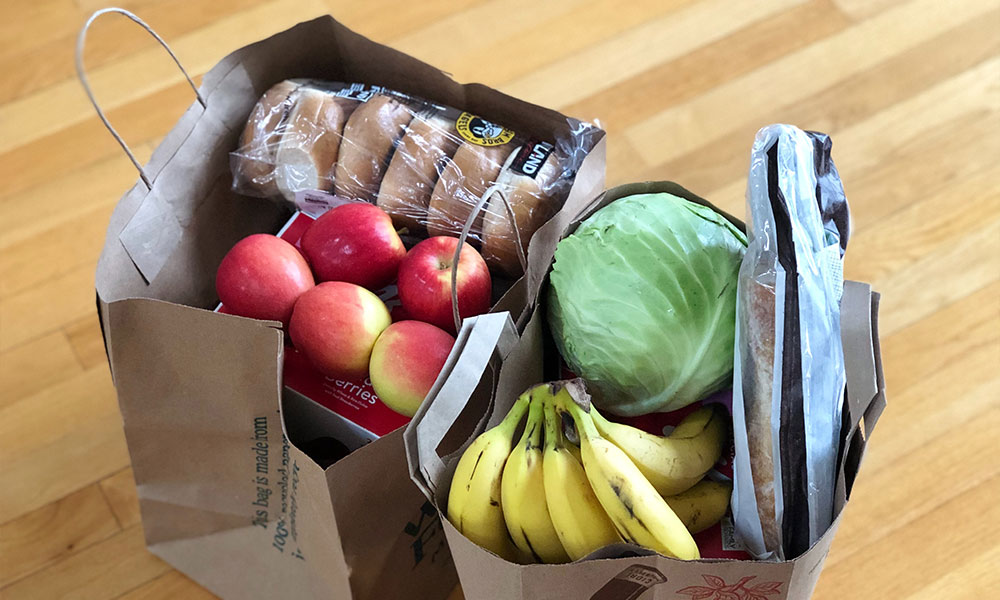
We choose from questions from Counseling, which is an integral part of our courses. Answers that inspire, explain and can help you on your way to a healthier life.
Question:
Is it possible to 'overdose' with a regular diet when I'm trying to reach the recommended daily intake of a nutrient?
Response:
Yes, that can happen too. Although such situations are less common than deficiency, the upper limit of intake may be exceeded if, for example, you consume a very large amount of fortified foods or foods with a naturally high concentration of a substance. In addition, this risk increases in combination with the use of dietary supplements that do not comply with the dosage recommended by the manufacturer.
For example vitamin A occurs naturally in high amounts in liver and fish oil, and if these foods are combined with supplements containing retinol, its level in the body can increase to toxic levels.
The same applies to Fr iron, which are found in high concentrations in the intestines. Its excess can accumulate in the liver and lead to oxidative stress.
Another "interesting thing" is the consumption of higher amounts of brazil nuts, which are an extremely rich source of selenium. Its excess can cause a metallic taste in the mouth, brittle nails or hair loss.
Therefore, it is always important to think about nutrition in context and to perceive that even high-quality and industrially unprocessed food can be problematic in large quantities.
|
|
|

|
have a nice day
Mgr. Martin Jelínek
|
|
|
|

The Nutrition Consultant course from ATAC was one of the best decisions in my professional and personal life. He provided me with deep and expert knowledge based on scientific facts while motivating me to further my education. I appreciate not only the quality of the teaching and the approach of the lecturer Mr. Jelínek, who was always able to explain everything clearly, but also the possibility of practical use of the acquired knowledge in the ZOF application. It was great to see the theory in practice and immediately see how to work with it in real situations. I would recommend this course to anyone who wants to really understand nutrition and help people on their journey to a healthier life. Thank you for a great foundation to build on!
Helena Vávrová, DiS.
www.cobuduzasvarit.cz
|
|
Follow us
Facebook
Instagram
YouTube
|
ATAC spol. s.r.o.
Obrovského 2138/12, 710 00 Ostrava
|
Unsubscribe
|
You received this email because you subscribed. If you haven't done so, write to info@kurzyatac.cz.
|
|
© 2025 ATAC spol. s.r.o. All rights reserved.
|
|
Back to Newsletter Archive
<!doctype html>
<html lang="en" xmlns="http://www.w3.org/1999/xhtml" xmlns:v="urn:schemas-microsoft-com:vml" xmlns:o="urn:schemas-microsoft-com:office:office">
<head>
<meta charset="utf-8">
<meta name="viewport" content="width=device-width, initial-scale=1.0">
<meta http-equiv="X-UA-Compatible" content="IE=edge">
<meta name="x-apple-disable-message-reformatting">
<meta name="format-detection" content="telephone=no,address=no,email=no,date=no,url=no">
<title>Courses ATAC Newsletter</title>
<!--[if mso]>
<noscript>
<xml>
<o:OfficeDocumentSettings>
<o:AllowPNG/>
<o:PixelsPerInch>96</o:PixelsPerInch>
</o:OfficeDocumentSettings>
</xml>
</noscript>
<![endif]-->
<style>
/* ----- Reset + helpers ----- */
html, body { margin:0 !important; padding:0 !important; height:100% !important; width:100% !important; font-family:Arial, sans-serif; }
* { -ms-text-size-adjust:100%; -webkit-text-size-adjust:100%; }
table, td { mso-table-lspace:0pt !important; mso-table-rspace:0pt !important; }
img { -ms-interpolation-mode:bicubic; border:0; outline:none; text-decoration:none; display:block; }
a { text-decoration:none; }
/* ----- Container ----- */
.email-bg { background:#ddd; }
.wrapper { width:600px; margin:0 auto; }
.content { background:#ffffff; }
.px { padding-left:24px; padding-right:24px; }
.py { padding-top:24px; padding-bottom:24px; }
.py-2 { padding-top:24px; padding-bottom:20px; }
.py-sm { padding-top:16px; padding-bottom:16px; }
.muted { color:#6b7280; }
.heading { font-size:24px; line-height:32px; font-weight:700; margin:0; color:#111827; }
.subheading { font-size:20px; line-height:26px; font-weight:600; margin:0; color:#111827; }
.text { font-size:16px; line-height:24px; color:#111827; margin:0; }
.text p { margin-bottom: 1em }
.text a { text-decoration: underline }
.small { font-size:12px; line-height:18px; }
.divider { border-top:1px solid #e5e7eb; height:1px; line-height:1px; }
.btn { background:#21a158; color:#ffffff !important; padding:12px 20px; border-radius:6px; display:inline-block; font-weight:600; }
.btn:hover { opacity:0.9; }
.center { text-align:center; }
.col { vertical-align:top; }
.spacer-16 { height:16px; line-height:16px; font-size:16px; }
.spacer-24 { height:24px; line-height:24px; font-size:24px; }
.spacer-32 { height:32px; line-height:32px; font-size:32px; }
.read-more { color: #21a158; font-size: 16px; font-weight:bold; margin: 0 0 4px 0;}
h1 { font-size: 22px }
h2 { font-size: 19px; margin: 1.5em 0 0.5em 0 }
h3 { font-size: 16px; margin: 1.5em 0 0.5em 0 }
/* ----- Responsive ----- */
@media (max-width:600px) {
.px { padding-left:16px !important; padding-right:16px !important; }
.py { padding-top:20px !important; padding-bottom:20px !important; }
.stack, .stack > tbody > tr > td { display:block !important; width:100% !important; }
.hide-sm { display:none !important; height:0 !important; overflow:hidden !important; }
.center-sm { text-align:center !important; }
}
/* ----- Dark mode (where supported) ----- */
@media (prefers-color-scheme: dark) {
.email-bg { background:#0b1220 !important; }
.content { background:#0f172a !important; }
.heading, .subheading, .text { color:#e5e7eb !important; }
.muted { color:#94a3b8 !important; }
.divider { border-top-color:#1f2937 !important; }
}
</style>
</head>
<body class="email-bg" style="background:#f5f7fb;">
<!-- Preheader (hidden preview text) -->
<div style="display:none; overflow:hidden; line-height:1px; opacity:0; max-height:0; max-width:0;">
Every day we take in hundreds of different nutrients - proteins, fats, carbohydrates, fiber, vitamins, minerals, phytochemicals... All of them together form the basis for the body to function...
</div>
<!-- Full width background -->
<table role="presentation" width="100%" cellpadding="0" cellspacing="0" border="0" class="email-bg">
<tr>
<td align="center" style="padding:8px">
<!--[if mso]>
<table role="presentation" width="600" cellpadding="0" cellspacing="0" border="0"><tr><td>
<![endif]-->
<div style="width:632px;background:#ffffff;padding:1em;margin:0 auto">
<table role="presentation" cellpadding="0" cellspacing="0" border="0" class="wrapper" width="600" style="width:600px; margin:0 auto;">
<!-- HEADER / LOGO -->
<tr>
<td class="px py-2 center content" style="border-radius:12px 12px 0 0;">
<!-- Logo -->
<a href="https://example.com" target="_blank" style="display:inline-block;">
<img src="https://www.kurzyatac.cz/data/newsletter/logo-en.png" width="240" height="40" alt="Logo" style="height:auto;">
</a>
</td>
</tr>
<!-- HERO BLOCK (image + headline + intro + CTA) -->
<tr>
<td class="content" style="background:#ffffff;">
<img src="https://www.kurzyatac.cz/data/vse-o-studiu/doporucene-denni-davky-zivin.jpg" width="600" height="300" alt="Recommended daily allowances of nutrients" style="width:100%; height:auto;">
<div class="px py">
<div class="text">
<p>Good morning,</p>
<p>every day we take in hundreds of different nutrients - proteins, fats, carbohydrates, fiber, vitamins, minerals, phytochemicals... All of them together form the basis for the body to function. And since these substances are an integral part of our daily diet, the question arises: How much do we really need to make our nutrition balanced?</p>
<p>They provide the answer to this question <b>recommended daily allowances of nutrients</b> – values that determine the amount of individual substances we should take in order to maintain health. But it's not just that we don't lack any nutrients. It is equally important not to exceed the limit beyond which the excess can start to harm the body. <b>Balance between scarcity and excess</b> is the key that decides whether nutrition acts as a prevention or a risk factor.
<p>In this edition, we will look at what exactly these values mean, how they are created, why they differ for individual population groups, how our society is doing in fulfilling them, and we will add some practical tips on how to get closer to the correct intake of nutrients even in a regular diet.</p>
</div>
</div>
</td>
</tr>
<!-- DIVIDER -->
<tr>
<td class="content px">
<div style="height:12px; line-height:12px; font-size:12px;"></div>
<div style="border-top:1px solid #e5e7eb; height:1px; line-height:1px;"></div>
<div style="height:12px; line-height:12px; font-size:12px;"></div>
</td>
</tr>
<tr>
<td class="content" style="background:#ffffff;">
<div class="px py">
<div class="text">
<h1>Nutrient intake balance</h1>
<p>Each nutrient has a role in the body. Some serve as a source of energy, others control metabolic processes or protect cells from damage. For all these functions to work properly, their reception must be within a certain range. Experts have therefore established <b>income reference values</b>, which delineate the range between the amount needed to maintain health and the upper limit above which intake could pose a risk. These values are based on extensive scientific analyzes and monitoring of the effect of different amounts of nutrients on health.</p>
<p>Even though we have a wide variety of foods and supplements available today, survey results show that many people still have <b>lack of some key nutrients</b>, while others receive in excessive amounts. A typical example is <b>vitamin D</b>, whose levels remain in the European population <a href="https://pmc.ncbi.nlm.nih.gov/articles/PMC5527850/">long term low</a>, although it is often supplemented. On the contrary, we encounter a risk with some mineral substances <a href="https://pmc.ncbi.nlm.nih.gov/articles/PMC164945/">exceeding the recommended values</a>, especially when combining supplements and fortified foods.</p>
<p>Similar disproportions also appear with macronutrients. It is usually in the regular menu <a href="https://pmc.ncbi.nlm.nih.gov/articles/PMC4736684/">excess saturated fat</a> and <a href="https://nutritionj.biomedcentral.com/articles/10.1186/s12937-016-0225-2">sugars</a>, but at the same time a lack of fiber, magnesium and omega-3 fats. Such an imbalance can be reflected in fat and sugar metabolism disorders, weakened immunity and an increased risk of civilization diseases.</p>
<p>Thus, maintaining a balanced nutrient intake means more than just "eating a variety". It requires a conscious approach to <b>food selection</b>, tracking their <b>quality</b> and understanding how individual nutrients interact with each other. It is not about strictly counting grams, but about the ability to recognize when our diet is slipping into one-sidedness, either in the form of an excess of animal fats and sugars, or, conversely, a lack of plant-based food sources.</p>
<p>From the findings of recent years, it follows that the best balance is maintained by people who base their diet on natural, minimally processed foods - vegetables, fruits, whole grains, legumes, quality fats and a reasonable amount of animal sources. Such an approach best corresponds to the principles on which intake reference values are based: not to maximize the intake of individual nutrients, but to seek a balance that allows the body to function naturally and in a long-term healthy manner.</p>
</div>
</div>
</td>
</tr>
<!-- DIVIDER -->
<tr>
<td class="content px">
<div style="height:12px; line-height:12px; font-size:12px;"></div>
<div style="border-top:1px solid #e5e7eb; height:1px; line-height:1px;"></div>
<div style="height:12px; line-height:12px; font-size:12px;"></div>
</td>
</tr>
<!-- TEXT BLOCK -->
<tr>
<td class="content px py">
<p style="color: #21a158; font-size: 16px; font-weight:bold; margin: 0 0 4px 0;">Read:</p>
<h2 style="font-size:20px; line-height:26px; font-weight:600; margin:0 0 1em 0; color:#111827;margin-bottom:1em">Why numbers are not enough</h2>
<p class="text">
Recommended Daily Allowances (RDA) or Reference Intake Values (RHI) are not just abstract numbers in tables. They express how many nutrients a healthy person should take in daily in order to maintain the proper functioning of the organism. In practice, however, these numbers are often not enough, because every body has different needs according to age, gender, activity and overall lifestyle.<br /><br />
That is why it is important to perceive the recommended doses not as dogma, but as a guide. It is used to recognize where our diet is out of balance, whether we are missing something for a long time or, on the contrary, it remains.
</p>
<div style="height:24px; line-height:24px; font-size:24px;"></div>
<div>
<!--[if mso]>
<v:roundrect xmlns:v="urn:schemas-microsoft-com:vml" xmlns:w="urn:schemas-microsoft-com:office:word" href="https://www.nutricourses.com/magazine/recommended-daily-allowances-of-nutrients" style="height:44px;v-text-anchor:middle;width:220px;" arcsize="10%" stroke="f" fillcolor="#21a158">
<w:anchorlock/>
<center style="color:#ffffff;font-family:Arial, sans-serif;font-size:16px;font-weight:bold;">Primary action</center>
</v:roundrect>
<![endif]-->
<!--[if !mso]><!-- -->
<a style="background:#21a158; color:#ffffff !important; padding:12px 20px; border-radius:6px; display:inline-block; font-weight:600;" href="https://www.nutricourses.com/magazine/recommended-daily-allowances-of-nutrients" target="_blank">Read the article</a>
<!--<![endif]-->
</div>
</td>
</tr>
<!-- DIVIDER -->
<tr>
<td class="content px">
<div style="height:16px; line-height:16px; font-size:16px;"></div>
<div style="border-top:1px solid #e5e7eb; height:1px; line-height:1px;"></div>
<div style="height:16px; line-height:16px; font-size:16px;"></div>
</td>
</tr>
<!-- TEXT + IMAGE (2 columns) -->
<tr>
<td class="content px py">
<p style="color: #21a158; font-size: 16px; font-weight:bold; margin: 0 0 4px 0;">Practical tip:</p>
<h2 style="font-size:20px; line-height:26px; font-weight:600; margin:0; color:#111827;margin-bottom:1em">From spreadsheets to reality</h2>
<div class="text">
<p>Recommended nutrient intakes are not about strict numbers, but about daily balance. They help us better understand how many nutrients the body needs and when they might be too much. Try these small steps to make sure you're giving your body exactly what it needs:</p>
<ul>
<li style="margin-bottom:1em"><b>Think in context, not individual meals:</b> The body evaluates nutrient intake in the long term. If something is missing or left over on one day, you compare it with other meals during the week.</li>
<li style="margin-bottom:1em"><b>Also respect the upper income limits:</b> With vitamin A or iron, an excess can be just as harmful as a deficiency. Track your total income from both food and supplements.</li>
<li style="margin-bottom:1em"><b>Consider your needs:</b> Active people, seniors, pregnant women and vegetarians have different requirements. Therefore, do not be afraid to adapt the composition of the menu to your own situation.
<li style="margin-bottom:1em"><b>Prioritize natural resources:</b> You can get most of the nutrients best from fresh food, their absorbability and interaction tend to be more effective than with isolated supplements.</li>
<li style="margin-bottom:1em"><b>Take the tables as a compass, not a dogma:</b> The intake reference values serve as a guideline for a healthy population, not as a strict target. More important than the exact numbers is the long-term balance.</li>
</ul>
<p>Small daily adjustments - more varied foods, less extremes and perception of your own body's needs - are the most reliable way to keep nutrition in balance.</p>
</div>
</td>
</tr>
<!-- DIVIDER -->
<tr>
<td class="content px">
<div style="height:12px; line-height:12px; font-size:12px;"></div>
<div style="border-top:1px solid #e5e7eb; height:1px; line-height:1px;"></div>
<div style="height:16px; line-height:16px; font-size:16px;"></div>
</td>
</tr>
<!-- TEXT + IMAGE (2 columns) -->
<tr>
<td class="content px py">
<p style="color: #21a158; font-size: 16px; font-weight:bold; margin: 0 0 4px 0;">Nutrition in Q&A:</p>
<p style="margin-top:16px;margin-bottom:16px"><img src="https://www.kurzyatac.cz/data/vse-o-studiu/kvalita-potravin.jpg" alt="" style="width:100%; height:auto;"></p>
<div class="text">
<p>
We choose from questions from <a href="https://www.nutricourses.com/advisory">Counseling</a>, which is an integral part of our courses. Answers that inspire, explain and can help you on your way to a healthier life.</p>
<p><em>Question:</em></p>
<p>Is it possible to 'overdose' with a regular diet when I'm trying to reach the recommended daily intake of a nutrient?</p>
<p><em>Response:</em></p>
<p>Yes, that can happen too. Although such situations are less common than deficiency, the upper limit of intake may be exceeded if, for example, you consume a very large amount of fortified foods or foods with a naturally high concentration of a substance. In addition, this risk increases in combination with the use of dietary supplements that do not comply with the dosage recommended by the manufacturer.</p>
<p>For example <b>vitamin A</b> occurs naturally in high amounts in <b>liver and fish oil</b>, and if these foods are combined with supplements containing retinol, its level in the body can increase to toxic levels.</p>
<p>The same applies to Fr <b>iron</b>, which are found in high concentrations in the intestines. Its excess can accumulate in the liver and lead to oxidative stress.</p>
<p>Another "interesting thing" is the consumption of higher amounts of brazil nuts, which are an extremely rich source of selenium. Its excess can cause a metallic taste in the mouth, brittle nails or hair loss.</p>
<p>Therefore, it is always important to think about nutrition in context and to perceive that even high-quality and industrially unprocessed food can be problematic in large quantities.</p>
</div>
</td>
</tr>
<!-- DIVIDER -->
<tr>
<td class="content px">
<div style="height:16px; line-height:16px; font-size:16px;"></div>
<div style="border-top:1px solid #e5e7eb; height:1px; line-height:1px;"></div>
<div style="height:12px; line-height:12px; font-size:12px;"></div>
</td>
</tr>
<tr>
<td class="content px">
<table>
<tr>
<td width="32">
<img src="https://www.kurzyatac.cz/assets/images/mj-podpis.jpg" alt="Martin Jelínek" style="width:64px;height:auto;border:1px solid #eee;display:block;border-radius:4px" />
</td>
<td style="padding-left:1em;font-size:.9em;color:#555;vertical-align:middle;">
have a nice day<br />
Mgr. Martin Jelínek
</td>
</tr>
</table>
</td>
</tr>
<!-- DIVIDER -->
<tr>
<td class="content px">
<div style="height:16px; line-height:16px; font-size:16px;"></div>
<div style="border-top:1px solid #e5e7eb; height:1px; line-height:1px;"></div>
<div style="height:16px; line-height:16px; font-size:16px;"></div>
</td>
</tr>
<!-- ABSOLVENT -->
<!-- TEXT BLOCK -->
<tr>
<td class="content px py" style="padding-top:0">
<div class="text" style="font-size:.9em;line-height:140%">
<img src="https://www.kurzyatac.cz/data/absolventi/helena-vavrova.jpg?v6" alt="" style="float:right;width:120px;height:auto;margin:6px 0 1em 2em;border-radius:5px" />
<p>The Nutrition Consultant course from ATAC was one of the best decisions in my professional and personal life. He provided me with deep and expert knowledge based on scientific facts while motivating me to further my education. I appreciate not only the quality of the teaching and the approach of the lecturer Mr. Jelínek, who was always able to explain everything clearly, but also the possibility of practical use of the acquired knowledge in the ZOF application. It was great to see the theory in practice and immediately see how to work with it in real situations. I would recommend this course to anyone who wants to really understand nutrition and help people on their journey to a healthier life. Thank you for a great foundation to build on!<br /><br /></p>
<p><b><a href="https://www.kurzyatac.cz/absolvent/407/helena-vavrova-dis">Helena Vávrová, DiS.</a></b><br />
<a href="https://cobuduzasvarit.cz/">www.cobuduzasvarit.cz</a>
</p>
</div>
</td> </tr>
<!-- SOCIAL (icons as text placeholders) -->
<tr>
<td class="content px py center">
<p class="small muted" style="margin:0 0 8px;">Follow us</p>
<p class="small">
<a href="https://www.facebook.com/kurzyatac" target="_blank" style="margin:0 8px; color:#2563eb;">Facebook</a>
<a href="https://www.instagram.com/kurzyatac.cz" target="_blank" style="margin:0 8px; color:#2563eb;">Instagram</a>
<a href="https://www.youtube.com/@MartinJel%C3%ADnekVyziva" target="_blank" style="margin:0 8px; color:#2563eb;">YouTube</a>
</p>
</td>
</tr>
<!-- FOOTER -->
<tr>
<td class="content px py" style="border-radius:0 0 12px 12px;">
<div style="border-top:1px solid #e5e7eb; height:1px; line-height:1px;"></div>
<div style="height:16px; line-height:16px; font-size:16px;"></div>
<table role="presentation" width="100%" cellpadding="0" cellspacing="0" border="0">
<tr>
<td class="small muted" style="text-align:left;">
ATAC spol. s.r.o.<br>
<span>Obrovského 2138/12, 710 00 Ostrava</span>
</td>
<td class="small muted" style="text-align:right;">
<a href="https://www.kurzyatac.cz/newsletter-odhlaseni" target="_blank" style="color:#6b7280; text-decoration:underline;">Unsubscribe</a>
</td>
</tr>
</table>
<div style="height:16px; line-height:16px; font-size:16px;"></div>
<p class="small muted" style="margin:0;">You received this email because you subscribed. If you haven't done so, write to <a href="mailto:info@kurzyatac.cz" style="color:#6b7280; text-decoration:underline;">info@kurzyatac.cz</a>.</p>
</td>
</tr>
<!-- LEGAL / ADDRESS -->
<tr>
<td class="px py-sm center muted small">
© 2025 ATAC spol. s.r.o. All rights reserved.
</td>
</tr>
</table>
</div>
<!--[if mso]></td></tr></table><![endif]-->
</td>
</tr>
</table>
</body>
</html>
