Numbers in Nutrition
Numbers are a fixed part of nutrition today – we count calories, macronutrient ratios, vitamin and mineral content, glycemic index and load, intake of salt, added sugar and alcohol. For many people, they represent orientation and a sense of control, but for others a source of stress and uncertainty.
Hello,
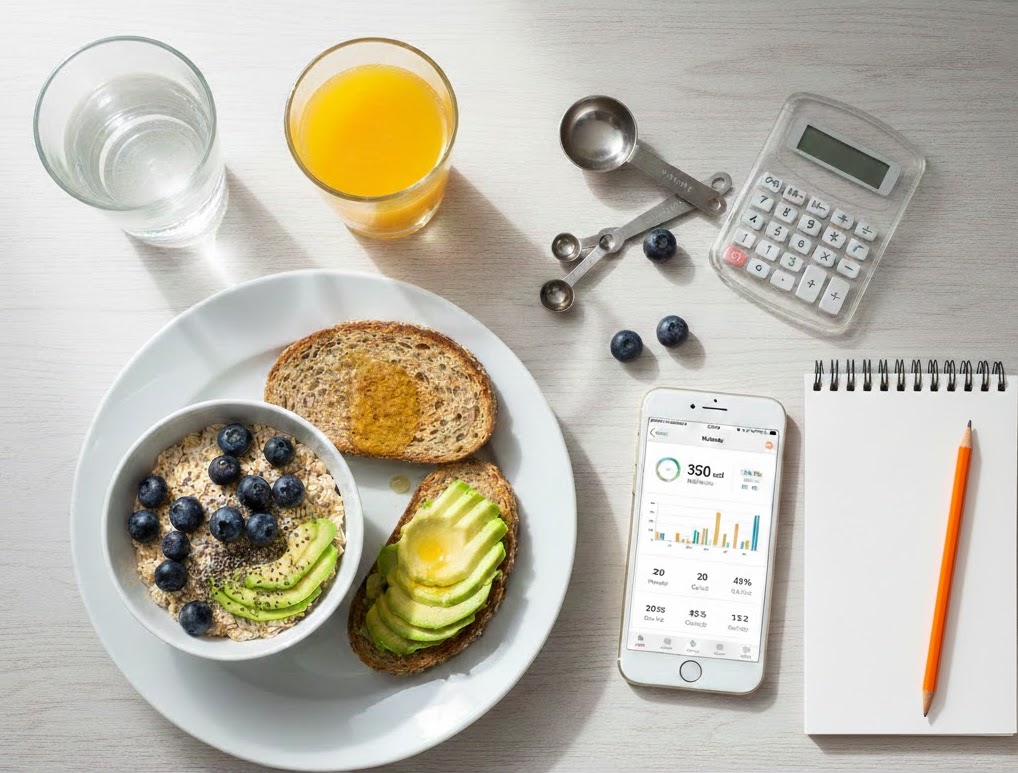
numbers are now a fixed part of nutrition – we count calories, macronutrient ratios, vitamin and mineral content, glycemic index and load, intake of salt, added sugar and alcohol. For many people, they represent orientation and a sense of control, but for others a source of stress and uncertainty.
In this newsletter, we will look at when it makes sense to rely on numbers, when they lose their informative value and how to work with them so that they really serve health. We will focus on their practical significance, limits and frequent mistakes and show why the accuracy of calculations alone does not guarantee better results.
|
|
|
Why do we need to count food?
Numbers in nutrition give a sense of order and objectivity and (seemingly) offer a simple answer to complex biological processes. The fact is that the energy value, amount of nutrients or recommended doses enable quick orientation in the environment of a rich supply of food and complex nutrition messages. The problem arises when numbers cease to serve as a tool and become an end in themselves. The human organism does not react to tables, but to the way of eating and its overall quality.
Energy intake and nutrient content have a clear physiological meaning and their approximate tracking can be useful. At the same time, the numbers cannot capture the influence of a whole range of factors:
- bioavailability of nutrients,
- the influence of technological and culinary food processing,
- individual reaction of the organism,
- differences in the gut microbiome,
- current state of health,
- levels of physical activity and energy expenditure,
- long-term eating habits and their stability.
This is also confirmed by scientific studies, which point to the fact that even with exactly the same energy intake, different dietary patterns can have diametrically different effects on our metabolism.
Numerical data therefore describe only part of reality.
Number tracking can be beneficial in clearly defined situations, such as when therapeutic diet, period weight reduction or u athletes with specific requirements. It is also useful as a short-term educational tool, which will help you understand the structure of the menu. Research shows that short-term calorie tracking may not cause a negative relationship to food in healthy individuals.
Long-term and meticulous monitoring of each value can, on the contrary, increase stress and worsen the relationship with food. The use of nutritional apps is increasing in the general population,
with research confirming that active calorie counting through these apps is associated with higher rates of eating disorder symptoms in young adults and pathological restriction in food.
If we decide to work with a nutritional application, it makes sense to monitor only a few basic indicators instead of being overwhelmed by details:
- overall energy balance,
- enough proteins,
- content fiber,
- quantity salt,
- representation added sugars.
Tracking individual nutritional parameters or table standards for micronutrients regardless of the overall dietary pattern
is in practice misleading and unnecessarily complicated. Expert reviews confirm that it has health and metabolism benefits food quality and long-term sustainability of habits much greater importance than the mathematical accuracy of the calculations itself.
|
|
|
|
Read:
When control becomes a problem
The relationship with food does not only concern the composition of the diet, but also the way in which we think about food and what role we attribute to it in life. A long-term need for control, strict rules and working with numbers can gradually disrupt natural eating behavior and become part of wider problems that go beyond nutrition.
|
|
|
|
Practical tip:
What you can do right now
-
Use the numbers as a guide, not as a rule.
Track the evolution of important nutritional values over time, such as average energy or protein intake per week. A single day with higher or lower income is of minimal significance and does not require immediate "levelling".
-
Focus on key indicators.
Energy, protein and fiber provide basic information on whether the menu covers basic nutritional needs. If you are consuming enough protein and fiber for a long time and your energy levels are within a reasonable range, small deviations in other values usually do not play a major role.
Limit long-term records.
A food journal can be useful as a short-term guidance tool, for example for a few weeks. If it becomes a daily duty without a clear goal, it stops bringing new information and rather increases the pressure for "perfection". Listen to your body's signals.
Watch when you eat out of hunger and when out of habit or stress. The feeling of fullness after a meal, energy during the day or subjective satisfaction with food are signals from practice that no table can capture. Evaluate the whole, not the details.
One "inaccurate" meal, incorrectly entered portion or day off schedule does not change the long-term result. More important is what most meals look like during the week and whether the diet is sustainable in the long term.
|
|
|
|
Nutrition in Q&A:
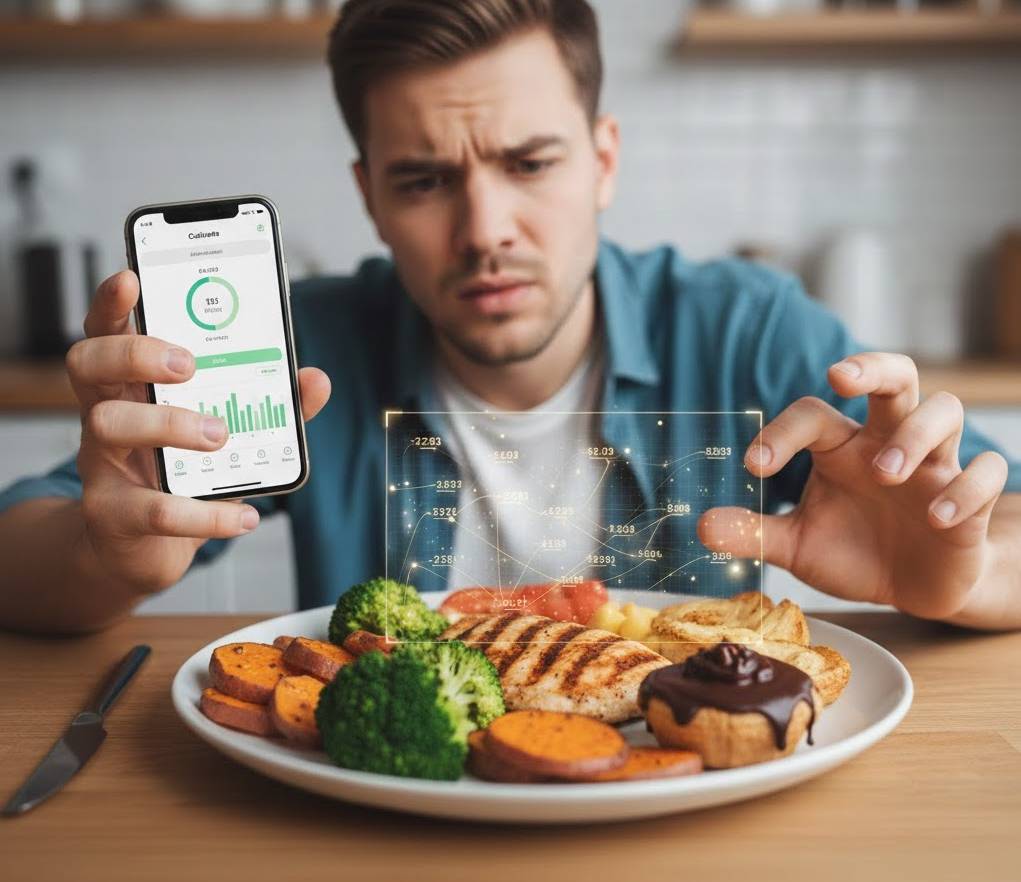
We choose from questions from Counseling, which is an integral part of our courses. Answers that inspire, explain and can help you on your way to a healthier life.
Question:
Can long-term counting of nutritional values worsen the relationship with food even in people without eating disorders?
Answer:
Yes, it can, if counting becomes the main measure of the "correctness" of food. For a portion of the population, long-term monitoring of nutritional values leads them to begin evaluating food primarily by numbers, not by actual hunger, taste, or impact on functioning during the day. A typical example is when a person rejects regular food outside the home simply because it cannot be quantified with sufficient certainty.
A frequent consequence is a gradual loss of the ability to estimate portions without weighing and recalculating. People then have difficulty eating spontaneously, for example in a restaurant or on a visit, and prefer to choose repetitive "safe" foods with known values in advance. This can lead to a one-sided menu, even if numerically it "comes right".
Some people experience increased anxiety when exceeding the set limit, which leads to compensatory behavior - skipping another meal, excessive exercise or trying to "make up" the intake in the following days. This cycle of inspection and correction increases the tension around food and disrupts its natural role.
The risk is higher in people with a tendency to perfectionism or those who perceive eating as a task to be completed. For this reason, in nutritional practice, it is recommended to use counting in a targeted and time-limited way, as a tool for orientation, not as a permanent way of managing food intake.
|

|
have a nice day
Mgr. Martin Jelínek
|
|
|
|

I have been interested in the world of nutrition since I was a student. When I was looking for a nutritional counseling course, I didn't want to just learn how to count calories, but to delve deeper into the secrets of how our body works and understand the wider connections. The half-year course of the consultant for nutrition and supplementation impressed me with its scope, it fulfilled my exact expectations. The inclusion of the ZOF application was also great, thanks to which I immediately had the opportunity to observe the learned knowledge during the practical creation of menus. The fact that the course was online also helped me a lot.
Now I am happy to pass on the packed information to my clients, teaching them how they can create their own ideal diet and at the same time understand why it is good for them. The support after the course, when we still have access to Mr. Jelínek's consulting room, is also absolutely amazing, I myself have already used this option when working with a more demanding client. Finally, I added several other courses, including a state-authorized exam, I return to the lessons and draw from them in my practice as well. I recommend studying with Mr. Jelínek to everyone who works with nutrition or is just interested in this topic and has questions.
Thank you from the bottom of my heart."
Jitka Kočová
www.jitkakocova.cz
|
|
|
ATAC spol. s.r.o.
Obrovského 2138/12, 710 00 Ostrava
|
Unsubscribe
|
You received this email because you subscribed. If you haven't done so, write to info@kurzyatac.cz.
|
|
© 2026 ATAC spol. s.r.o. All rights reserved.
|
|
Back to Newsletter Archive
<!doctype html>
<html lang="en" xmlns="http://www.w3.org/1999/xhtml" xmlns:v="urn:schemas-microsoft-com:vml" xmlns:o="urn:schemas-microsoft-com:office:office">
<head>
<meta charset="utf-8">
<meta name="viewport" content="width=device-width, initial-scale=1.0">
<meta http-equiv="X-UA-Compatible" content="IE=edge">
<meta name="x-apple-disable-message-reformatting">
<meta name="format-detection" content="telephone=no,address=no,email=no,date=no,url=no">
<title>Courses ATAC Newsletter</title>
<!--[if mso]>
<noscript>
<xml>
<o:OfficeDocumentSettings>
<o:AllowPNG/>
<o:PixelsPerInch>96</o:PixelsPerInch>
</o:OfficeDocumentSettings>
</xml>
</noscript>
<![endif]-->
<style>
/* ----- Reset + helpers ----- */
html, body { margin:0 !important; padding:0 !important; height:100% !important; width:100% !important; font-family:'Helvetica Neue', Helvetica, Arial, sans-serif; -webkit-font-smoothing: antialiased; }
* { -ms-text-size-adjust:100%; -webkit-text-size-adjust:100%; }
table, td { mso-table-lspace:0pt !important; mso-table-rspace:0pt !important; }
img { -ms-interpolation-mode:bicubic; border:0; outline:none; text-decoration:none; display:block; }
a { text-decoration:none; }
/* ----- Container ----- */
.email-bg { background:#e1ebe0; }
.wrapper { width:600px; margin:0 auto; }
.content { background:#ffffff; }
.px { padding-left:40px; padding-right:40px; }
.py { padding-top:40px; padding-bottom:40px; }
.py-2 { padding-top:32px; padding-bottom:24px; }
.py-sm { padding-top:24px; padding-bottom:24px; }
.muted { color:#64748b; }
.heading { font-size:26px; line-height:34px; font-weight:700; margin:0; color:#1e293b; letter-spacing: -0.5px; }
.subheading { font-size:22px; line-height:28px; font-weight:600; margin:0; color:#1e293b; }
.text { font-size:16px; line-height:28px; color:#334155; margin:0; }
.text p { margin-bottom: 1.5em; margin-top: 0; }
.text a { text-decoration: underline; color: #21a158; }
.small { font-size:13px; line-height:20px; }
.divider { border-top:1px solid #e2e8f0; height:1px; line-height:1px; }
.btn { background:#21a158; color:#ffffff !important; padding:16px 32px; border-radius:50px; display:inline-block; font-weight:600; font-size: 16px; text-decoration:none; text-align:center; box-shadow: 0 4px 6px -1px rgba(33, 161, 88, 0.2); }
.btn:hover { background-color:#1a8a4a; }
.center { text-align:center; }
.col { vertical-align:top; }
.text-right { text-align: right }
h1 { font-size: 28px; line-height: 1.2; color: #0f172a; margin: 0 0 1em 0; font-weight: 600; }
h2 { font-size: 22px; margin: 2em 0 0.8em 0; color: #0f172a; font-weight: 700; }
h3 { font-size: 18px; margin: 1.5em 0 0.5em 0; color: #0f172a; font-weight: 700; }
ul { margin-top: 0; margin-bottom: 1.5em; padding-left: 20px; }
li { margin-bottom: 0.5em; padding-left: 5px; }
/* ----- Responsive ----- */
@media (max-width:640px) {
.px { padding-left:20px !important; padding-right:20px !important; }
.py { padding-top:30px !important; padding-bottom:30px !important; }
.wrapper { width:100% !important; }
.stack, .stack > tbody > tr > td { display:block !important; width:100% !important; }
.hide-sm { display:none !important; height:0 !important; overflow:hidden !important; }
.center-sm { text-align:center !important; }
h1 { font-size: 24px !important; }
h2 { font-size: 20px !important; }
.btn { display: block !important; width: auto !important; margin: 0 auto !important; }
}
/* ----- Dark mode (where supported) ----- */
@media (prefers-color-scheme: dark) {
.email-bg { background:#0f172a !important; }
.content { background:#1e293b !important; }
.heading, .subheading, h1, h2, h3 { color:#f8fafc !important; }
.text, p, li { color:#cbd5e1 !important; }
.muted { color:#94a3b8 !important; }
.divider { border-top-color:#334155 !important; }
}
</style>
</head>
<body class="email-bg">
<!-- Preheader (hidden preview text) -->
<div style="display:none; overflow:hidden; line-height:1px; opacity:0; max-height:0; max-width:0;">
Numbers are a fixed part of nutrition today – we count calories, macronutrient ratios, vitamin and mineral content, glycemic index and load, intake of salt, added sugar and alcohol. For many people, they represent orientation and a sense of control, but for others a source of stress and uncertainty.
</div>
<!-- Full width background -->
<table role="presentation" width="100%" cellpadding="0" cellspacing="0" border="0" class="email-bg" style="background-color: #e1ebe0;">
<tr>
<td align="center" style="padding:20px 10px;">
<!--[if mso]>
<table role="presentation" width="600" cellpadding="0" cellspacing="0" border="0"><tr><td>
<![endif]-->
<table role="presentation" cellpadding="0" cellspacing="0" border="0" class="wrapper" width="600" style="width:100%; max-width:600px; margin:0 auto">
<!-- HEADER / LOGO -->
<tr>
<td class="px py-sm" style="padding-top: 18px; padding-bottom: 22px;">
<!-- Logo -->
<a href="https://www.kurzyatac.cz" target="_blank">
<img src="https://www.kurzyatac.cz/data/newsletter/logo-en.png" width="232" height="41" alt="ATAC courses" style="height:auto; display: block; border: 0;">
</a>
</td>
<td style="text-align: right;">
<a target="_blank" href="https://www.facebook.com/kurzyatac" style="text-decoration:none; display:inline-block;">
<img src="https://www.kurzyatac.cz/data/newsletter/icon-facebook.png" alt="" width="38" height="38" style="display:block; border:0; margin-right: 8px" />
</a>
<a target="_blank" href="https://www.instagram.com/kurzyatac.cz/" style="text-decoration:none; display:inline-block;">
<img src="https://www.kurzyatac.cz/data/newsletter/icon-instagram.png" alt="" width="38" height="38" style="display:block; border:0;" />
</a>
</td>
</tr>
</table>
<div style="max-width:600px; margin:0 auto; box-shadow: 0 4px 20px rgba(0,0,0,0.05); border-radius: 16px; overflow: hidden;">
<table role="presentation" cellpadding="0" cellspacing="0" border="0" class="wrapper" width="600" style="width:100%; max-width:600px; margin:0 auto; background:#ffffff;">
<!-- HERO BLOCK (image + headline + intro + CTA) -->
<tr>
<td class="content" style="background:#ffffff;">
<img src="https://www.kurzyatac.cz/data/newsletter/cisla-ve-vyzive.jpg" width="600" height="300" alt="Don't give Alzheimer's a chance" style="width:100%; height:auto; display: block;">
<div class="px py" style="padding: 32px;">
<div class="text">
<p>Hello,</p>
<p>numbers are now a fixed part of nutrition – we count calories, macronutrient ratios, vitamin and mineral content, glycemic index and load, intake of salt, added sugar and alcohol. For many people, they represent orientation and a sense of control, but for others a source of stress and uncertainty. </p>
<p>In this newsletter, we will look at when it makes sense to rely on numbers, when they lose their informative value and how to work with them so that they really serve health. We will focus on their practical significance, limits and frequent mistakes and show why the accuracy of calculations alone does not guarantee better results.</p>
</div>
</div>
</td>
</tr>
<!-- DIVIDER -->
<tr>
<td class="content px" style="">
<div style="border-top:1px solid #e1ebe0; height:1px; line-height:1px;"></div>
</td>
</tr>
<tr>
<td class="content" style="background:#ffffff;">
<div class="px py" style="padding: 32px;">
<div class="text">
<h1>Why do we need to count food?</h1>
<p>Numbers in nutrition give a sense of order and objectivity and (seemingly) offer a simple answer to complex biological processes. The fact is that the energy value, amount of nutrients or recommended doses enable quick orientation in the environment of a rich supply of food and complex nutrition messages. The problem arises when numbers cease to serve as a tool and become an end in themselves. The human organism does not react to tables, but to the way of eating and its overall quality.</p>
<p>Energy intake and nutrient content have a clear physiological meaning and their approximate tracking can be useful. At the same time, the numbers cannot capture the influence of a whole range of factors:</p>
<ul>
<li>bioavailability of nutrients,</li>
<li>the influence of technological and culinary food processing,</li>
<li>individual reaction of the organism,</li>
<li>differences in the gut microbiome,</li>
<li>current state of health,</li>
<li>levels of physical activity and energy expenditure,</li>
<li>long-term eating habits and their stability.</li>
</ul>
<p>This is also confirmed by scientific studies, which point to the fact that even with exactly the same energy intake, different dietary patterns can have diametrically <a href="https://pmc.ncbi.nlm.nih.gov/articles/PMC12775015/">different effects on our metabolism</a>.</p>
<p><b>Numerical data therefore describe only part of reality.</b></p>
<p>Number tracking can be beneficial in clearly defined situations, such as when <strong>therapeutic</strong> diet, period <strong>weight reduction</strong> or u <strong>athletes</strong> with specific requirements. It is also useful as <strong>a short-term educational tool</strong>, which will help you understand the structure of the menu. Research shows that short-term calorie tracking <a href="https://pmc.ncbi.nlm.nih.gov/articles/PMC9109125/">may not cause a negative relationship to food in healthy individuals</a>.</p>
<p>Long-term and meticulous monitoring of each value can, on the contrary, increase stress and worsen the relationship with food. The use of nutritional apps is increasing in the general population,
with research confirming that active calorie counting through these apps is associated with higher rates of eating disorder symptoms in young adults and <a href="https://www.sciencedirect.com/science/article/abs/pii/S1471015316303646">pathological restriction in food</a>.</p>
<p>If we decide to work with a nutritional application, it makes sense to monitor only a few basic indicators instead of being overwhelmed by details:</p>
<ul>
<li>overall <b>energy balance</b>,</li>
<li>enough <b>proteins</b>,</li>
<li>content <b>fiber</b>,</li>
<li>quantity <b>salt</b>,</li>
<li>representation <b>added sugars</b>.</li>
</ul>
<p>
Tracking <b>individual nutritional parameters</b> or <b>table standards for micronutrients</b> regardless of the overall dietary pattern
is in practice misleading and unnecessarily complicated. Expert reviews confirm that it has health and metabolism benefits <a href="https://nutritionsource.hsph.harvard.edu/healthy-weight/best-diet-quality-counts/">food quality and long-term sustainability of habits</a> much greater importance than the mathematical accuracy of the calculations itself.</p>
</div>
</div>
</td>
</tr>
<!-- DIVIDER -->
<tr>
<td class="content px" style="">
<div style="border-top:1px solid #e1ebe0; height:1px; line-height:1px;"></div>
</td>
</tr>
<!-- TEXT BLOCK -->
<tr>
<td class="content px py" style="padding: 32px;">
<p style="color: #21a158; font-size: 14px; font-weight:bold; text-transform:uppercase; letter-spacing:1px; margin: 0 0 12px 0;">Read:</p>
<h2 style="font-size:20px; line-height:26px; font-weight:600; margin:0 0 1em 0; color:#111827;margin-bottom:1em">When control becomes a problem</h2>
<p class="text">The relationship with food does not only concern the composition of the diet, but also the way in which we think about food and what role we attribute to it in life. A long-term need for control, strict rules and working with numbers can gradually disrupt natural eating behavior and become part of wider problems that go beyond nutrition.</p>
<div style="margin-top:20px; margin-bottom: 20px;">
<!--[if mso]>
<v:roundrect xmlns:v="urn:schemas-microsoft-com:vml" xmlns:w="urn:schemas-microsoft-com:office:word" href="https://www.kurzyatac.cz/vse-o-studiu/poruchy-prijmu-potravy" style="height:50px;v-text-anchor:middle;width:200px;" arcsize="50%" stroke="f" fillcolor="#21a158">
<w:anchorlock/>
<center style="color:#ffffff;font-family:sans-serif;font-size:16px;font-weight:bold;">Read the article</center>
</v:roundrect>
<![endif]-->
<!--[if !mso]><!-- -->
<a class="btn" href="https://www.nutricourses.com/magazine/eating-disorders" target="_blank">Read the article</a>
<!--<![endif]-->
</div>
</td>
</tr>
<!-- DIVIDER -->
<tr>
<td class="content px" style="">
<div style="border-top:1px solid #e1ebe0; height:1px; line-height:1px;"></div>
</td>
</tr>
<!-- TEXT + IMAGE (2 columns) -->
<tr>
<td class="content px py" style="padding: 32px;">
<p style="color: #21a158; font-size: 14px; font-weight:bold; text-transform:uppercase; letter-spacing:1px; margin: 0 0 12px 0;">Practical tip:</p>
<h2 style="font-size:20px; line-height:26px; font-weight:600; margin:0; color:#111827;margin-bottom:1em">What you can do right now</h2>
<div class="text">
<ul>
<li>
<p><strong>Use the numbers as a guide, not as a rule.</strong><br />
Track the evolution of important nutritional values over time, such as average energy or protein intake per week. A single day with higher or lower income is of minimal significance and does not require immediate "levelling".</p>
</li>
<li>
<p><strong>Focus on key indicators.</strong><br />
Energy, protein and fiber provide basic information on whether the menu covers basic nutritional needs. If you are consuming enough protein and fiber for a long time and your energy levels are within a reasonable range, small deviations in other values usually do not play a major role.</p>
</li>
<li><p><strong>Limit long-term records.</strong><br />
A food journal can be useful as a short-term guidance tool, for example for a few weeks. If it becomes a daily duty without a clear goal, it stops bringing new information and rather increases the pressure for "perfection".</p></li>
<li><p><strong>Listen to your body's signals.</strong><br />
Watch when you eat out of hunger and when out of habit or stress. The feeling of fullness after a meal, energy during the day or subjective satisfaction with food are signals from practice that no table can capture.</p></li>
<li><p><strong>Evaluate the whole, not the details.</strong><br />
One "inaccurate" meal, incorrectly entered portion or day off schedule does not change the long-term result. More important is what most meals look like during the week and whether the diet is sustainable in the long term.</p></li>
</ul>
</div>
</td>
</tr>
<!-- DIVIDER -->
<tr>
<td class="content px" style="">
<div style="border-top:1px solid #e1ebe0; height:1px; line-height:1px;"></div>
</td>
</tr>
<!-- TEXT + IMAGE (2 columns) -->
<tr>
<td class="content px py" style="padding: 32px;">
<p style="color: #21a158; font-size: 14px; font-weight:bold; text-transform:uppercase; letter-spacing:1px; margin: 0 0 12px 0;">Nutrition in Q&A:</p>
<p style="margin-top:16px;margin-bottom:16px"><img src="https://www.kurzyatac.cz/data/newsletter/cisla-ve-vyzive-2.jpg" alt="" style="width:100%; height:auto;"></p>
<div class="text">
<p>
We choose from questions from <a href="https://www.nutricourses.com/advisory">Counseling</a>, which is an integral part of our courses. Answers that inspire, explain and can help you on your way to a healthier life.</p>
<p><b><em>Question:</em></b></p>
<p>Can long-term counting of nutritional values worsen the relationship with food even in people without eating disorders?</p>
<p><b><em>Answer:</em></b></p>
<p>Yes, it can, if counting becomes the main measure of the "correctness" of food. For a portion of the population, long-term monitoring of nutritional values leads them to begin evaluating food primarily by numbers, not by actual hunger, taste, or impact on functioning during the day. A typical example is when a person rejects regular food outside the home simply because it cannot be quantified with sufficient certainty.</p>
<p>A frequent consequence is a gradual loss of the ability to estimate portions without weighing and recalculating. People then have difficulty eating spontaneously, for example in a restaurant or on a visit, and prefer to choose repetitive "safe" foods with known values in advance. This can lead to a one-sided menu, even if numerically it "comes right".</p>
<p>Some people experience increased anxiety when exceeding the set limit, which leads to compensatory behavior - skipping another meal, excessive exercise or trying to "make up" the intake in the following days. This cycle of inspection and correction increases the tension around food and disrupts its natural role.</p>
<p>The risk is higher in people with a tendency to perfectionism or those who perceive eating as a task to be completed. For this reason, in nutritional practice, it is recommended to use counting in a targeted and time-limited way, as a tool for orientation, not as a permanent way of managing food intake.</p>
</div>
</td>
</tr>
<tr>
<td class="content px">
<table>
<tr>
<td width="32">
<img src="https://www.kurzyatac.cz/assets/images/mj-podpis.jpg" alt="Martin Jelínek" style="width:64px;height:auto;border:1px solid #e2e8f0;display:block;border-radius:100px" />
</td>
<td style="padding-left:1em;font-size:16px;color:#334155;vertical-align:middle;font-weight:600;">
have a nice day<br />
Mgr. Martin Jelínek
</td>
</tr>
</table>
</td>
</tr>
<!-- DIVIDER -->
<tr>
<td class="content px" style="padding-top:32px;padding-bottom:16px">
<div style="border-top:1px solid #e1ebe0; height:1px; line-height:1px;"></div>
</td>
</tr>
<!-- ABSOLVENT -->
<!-- TEXT BLOCK -->
<tr>
<td class="content px py" style="padding: 0 32px 32px 32px;">
<div class="text" style="font-size:15px;line-height:1.6; background-color: #f8fafc; padding: 24px; border-radius: 12px;">
<img src="https://www.kurzyatac.cz/data/absolventi/jitka-kocova.jpg?v6" alt="" style="float:right;width:80px;height:80px;object-fit:cover; margin:0 0 1em 1.5em;border-radius:50%;" />
<p style="font-style: italic;">I have been interested in the world of nutrition since I was a student. When I was looking for a nutritional counseling course, I didn't want to just learn how to count calories, but to delve deeper into the secrets of how our body works and understand the wider connections. The half-year course of the consultant for nutrition and supplementation impressed me with its scope, it fulfilled my exact expectations. The inclusion of the ZOF application was also great, thanks to which I immediately had the opportunity to observe the learned knowledge during the practical creation of menus. The fact that the course was online also helped me a lot.<br /><br />
Now I am happy to pass on the packed information to my clients, teaching them how they can create their own ideal diet and at the same time understand why it is good for them. The support after the course, when we still have access to Mr. Jelínek's consulting room, is also absolutely amazing, I myself have already used this option when working with a more demanding client. Finally, I added several other courses, including a state-authorized exam, I return to the lessons and draw from them in my practice as well. I recommend studying with Mr. Jelínek to everyone who works with nutrition or is just interested in this topic and has questions.
Thank you from the bottom of my heart."</p>
<p><b><a href="https://www.nutricourses.com/graduate/352/jitka-kocova" style="color:#111827;">Jitka Kočová</a></b><br />
<a href="https://www.jitkakocova.cz">www.jitkakocova.cz</a></p>
</div>
</td>
</tr>
<!-- DIVIDER -->
<tr>
<td class="content px" style="">
<div style="border-top:1px solid #e1ebe0; height:1px; line-height:1px;"></div>
</td>
</tr>
<!-- FOOTER -->
<tr>
<td class="content px py" style="padding: 32px 32px 20px 32px;">
<table role="presentation" width="100%" cellpadding="0" cellspacing="0" border="0">
<tr>
<td class="small muted" style="text-align:left;">
ATAC spol. s.r.o.<br>
<span>Obrovského 2138/12, 710 00 Ostrava</span>
</td>
<td class="small muted" style="text-align:right;">
<a href="https://www.kurzyatac.cz/newsletter-odhlaseni" target="_blank" style="color:#6b7280; text-decoration:underline;">Unsubscribe</a>
</td>
</tr>
</table>
<div style="height:16px; line-height:16px; font-size:16px;"></div>
<p class="small muted" style="margin:0;">You received this email because you subscribed. If you haven't done so, write to <a href="mailto:info@kurzyatac.cz" style="color:#6b7280; text-decoration:underline;">info@kurzyatac.cz</a>.</p>
</td>
</tr>
<!-- LEGAL / ADDRESS -->
<tr>
<td class="px py-sm center muted small" style="padding:0 32px 32px 32px">
© 2026 ATAC spol. s.r.o. All rights reserved.
</td>
</tr>
</table>
</div>
<!--[if mso]></td></tr></table><![endif]-->
</td>
</tr>
</table>
</body>
</html>



